
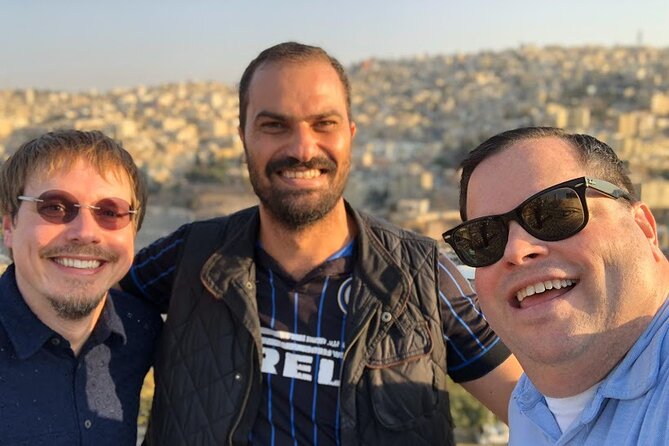
Reviewed · WALKING TOURS
Private Walking Tour in Amman With Local
Amman reveals itself on foot. This private walk pairs downtown markets and local food with major sights such as the Roman Theater, Citadel, and Nymphaeum. I like the chance to ask endless questions of one guide, and I like how the route introduces everyday Jordanian life rather than only ancient stones. The main caution is clear: the tour often focuses more on markets than monuments.
This is a useful first-day orientation, especially if you want help with food, shopping, customs, and local etiquette. Guides such as Orwah, also called Orwa, are praised for humor, warmth, and practical advice. Still, $49 per person is not a bargain if your main goal is to enter the Roman Theater, visit the Citadel, or study Amman’s architecture.
In This Review
- Key points before you book
- What this Amman walking tour is really about
- Starting at the Grand Husseini Mosque
- The Duke’s Diwan and an old Amman address
- Al Balad’s produce market and the sound of commerce
- Kunafa at Habibah Sweets
- Basman Street’s shops, spices, and perfume
- Ancient Amman from the street
- Guides, pace, and the private format
- What $49 buys you
- Who should book this walk?
- Booking advice and cancellation terms
- Should you book the Private Walking Tour in Amman?
- FAQ
- How long does the private walking tour last?
- Where does the tour begin?
- Where does the tour end?
- Is the tour private?
- Are the Amman Citadel and Roman Theater included?
- Is food included?
- Can I enter the Grand Husseini Mosque?
- Do I need good walking shoes?
- What happens if I cancel?
Key points before you book
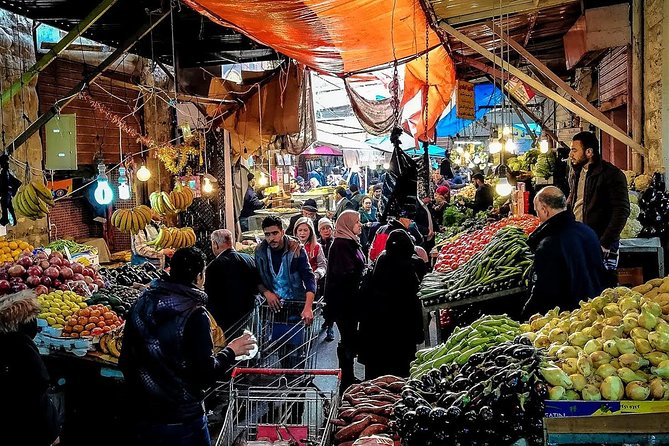
- The markets are the heart of the experience: Expect spices, produce, perfume, clothing, souvenirs, and shopkeepers’ calls rather than a long series of formal sights.
- Food is part of the walk: You taste kunafa at Habibah Sweets and sample other Jordanian foods and drinks.
- Historic sights are pointed out, not toured inside: The Roman Theater, Amman Citadel, and Nymphaeum are passed or explained from outside.
- A private guide makes the route flexible: You can ask questions, request local advice, and shape some of the time around your interests.
- Orwah is a major strength: His humor, enthusiasm, and advice about later activities in Amman receive repeated praise.
- Plan for real walking: Good walking shoes matter, and the tour takes place in the busy central streets and market lanes.
What this Amman walking tour is really about
This is best understood as a street-life tour with historical signposts. It begins near the Grand Husseini Mosque and moves through Al Balad, the oldest part of central Amman, using markets and food stops to explain how the city works today.
You will see the names of famous ancient sites on the route, but the experience is not a substitute for a ticketed visit to the Amman Citadel or Roman Theater. The guide points them out and helps you understand where they are. You should visit them separately, either before or after the walk.
That distinction matters. The advertised attractions can create the impression of a traditional sightseeing tour, while the actual rhythm is closer to a guided stroll through shops, stalls, side streets, and snack counters. I would book it for local context, not for a full archaeological tour.
The private format is useful. Your group gets the guide’s attention, so you can ask about Jordanian customs, food, religion, neighborhoods, shopping, or plans for the rest of your stay. Several people found the tour particularly helpful as an introduction to Amman and Jordan.
More Walking Tours in Amman
- Amman Walking Tour: Hidden Gems, Culture & Street Food
★ 5.0 · 241 reviews - Private Street Food and Walking Tour Amman Downtown
★ 5.0 · 71 reviews - Amman Food Tours: 3-Hours Guided Walking Food Tour in Amman
★ 5.0 · 71 reviews
Starting at the Grand Husseini Mosque
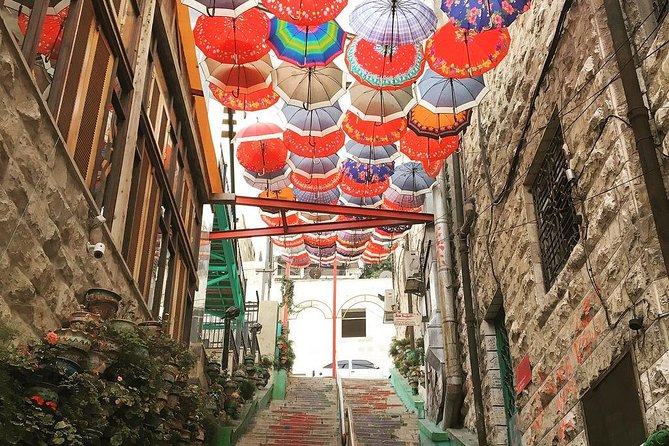
The meeting point is the Grand Husseini Mosque on King Talal Street. It is one of Amman’s oldest mosques, rebuilt by King Abdullah I in 1932 on the site of a mosque associated with the second Caliph, Omar Bin Al-Khattab, dating to around 640 AD.
The mosque gives the opening section a strong sense of place. This is not a quiet monument set apart from daily life. It sits beside the markets, traffic, shops, and footpaths of central Amman. Your guide can explain the area’s religious and social importance before leading you into the surrounding streets.
You may be allowed to enter if dressed appropriately, but entry is not guaranteed. Dress modestly, especially if you hope to look inside. The tour information does not promise a mosque visit, so treat it as a possibility rather than a fixed part of the schedule.
Two nearby markets are worth noting. Souq Bukharia is a place to look for souvenirs, while Souq Al-Sukar sells fruit, vegetables, nuts, and spices. These markets establish the tone for the rest of the walk: shopping is not an afterthought here. It is the main window into local life.
The Duke’s Diwan and an old Amman address
The Duke of Mukhyber’s Residence is a small historic townhouse built in 1924. It has served as Amman’s first post office, the Ministry of Finance, and a hotel. Today, it contains period furnishings and old photographs of Amman.
I like this stop because it offers a glimpse of the city before modern Amman spread across the hills. The photographs help connect the market streets around you with an earlier, smaller city. The house is described as charming and understated rather than grand, so keep your expectations modest.
One practical point deserves emphasis: the route may pass by or explain the Duke’s Diwan without giving you a full interior visit. Some people expect to enter because the residence is highlighted. Ask your guide at the start exactly what access is planned that day.
The stop is scheduled for about 20 minutes and has no separate admission charge. It works best as a short historical pause between market areas, not as a major museum visit.
Al Balad’s produce market and the sound of commerce
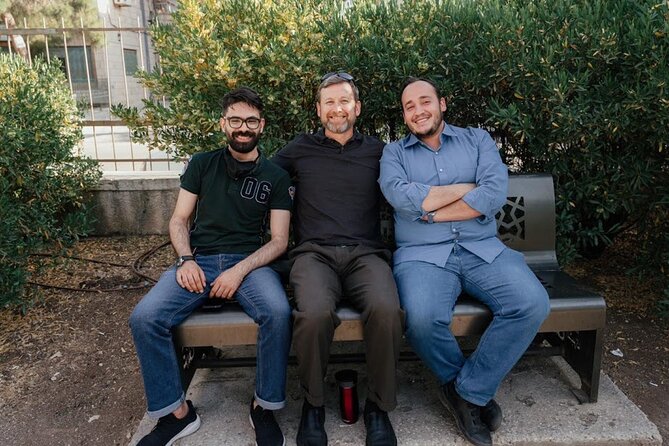
Souk el-Khodra, the vegetable market, gives you a direct look at everyday shopping in Amman. Stalls carry fresh fruit and vegetables, along with nuts and other seasonal goods. Much of the produce is locally grown, and prices are described as lower than those in many supermarkets.
Your guide shows you how the market works and may explain unfamiliar ingredients, seasonal produce, and the way sellers attract attention. The atmosphere comes from ordinary commerce: traders calling out, shoppers comparing goods, and narrow paths threaded between stalls.
This is one of the tour’s strongest sections if you enjoy food culture. It is also the part most likely to feel routine if you expect one landmark after another. A produce market is not a polished attraction, and the pleasure comes from watching daily life rather than checking off a famous sight.
If you are staying in an apartment and plan to cook, pay attention here. The walk can help you recognize local ingredients and understand where residents shop. If you want time to make purchases, tell the guide early. The schedule is fairly brisk, and the purpose is usually to show you around rather than provide a long shopping break.
A completely different kind of day out:
- Amman: Petra, Wadi Rum, and Dead Sea 2-Day Tour
★ 4.9 · 1,173 reviews - 2-Day Tour: Petra, Wadi Rum, and Dead Sea from Amman
★ 5.0 · 1,141 reviews - From Amman: Petra & Wadi Rum Private or group Day Tour
★ 4.9 · 750 reviews - From Amman: Petra and Wadi rum Full day Tour
★ 5.0 · 538 reviews
Kunafa at Habibah Sweets
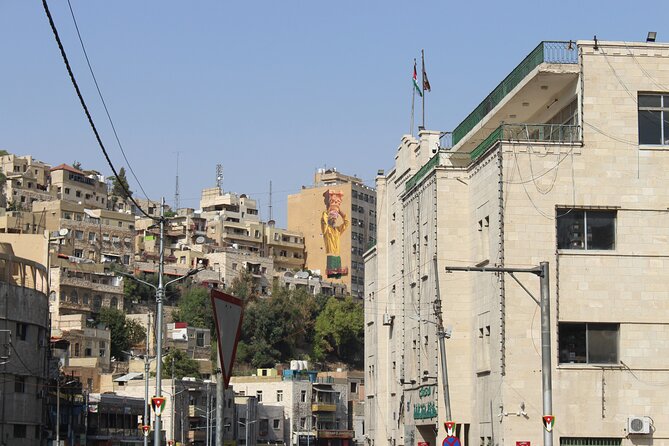
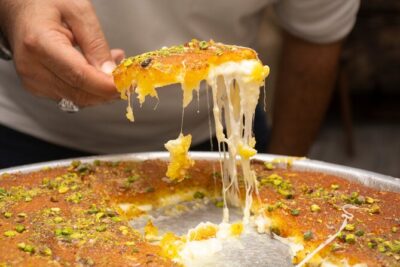
The food stop at Habibah Sweets is one of the clearest highlights. You taste kunafa, a sweet dish made by the Habibah family since the 1940s.
Kunafa is a fitting choice for this tour. It gives you a taste of Jordanian food culture while placing you in a long-running downtown business. The sample is included in the price, so you do not need to budget separately for this tasting.
This is not a full meal. Think of it as one stop in a food-focused walk, with additional samples and street food along the way. If you have dietary restrictions, ask the guide before eating, since no detailed ingredient or allergy information is provided.
The stop also helps explain why the tour appeals to people who care about eating as much as sightseeing. Amman’s food traditions are not presented in a formal cooking class. You encounter them in working shops and old restaurants, alongside the people who buy and sell the food.
Basman Street’s shops, spices, and perfume
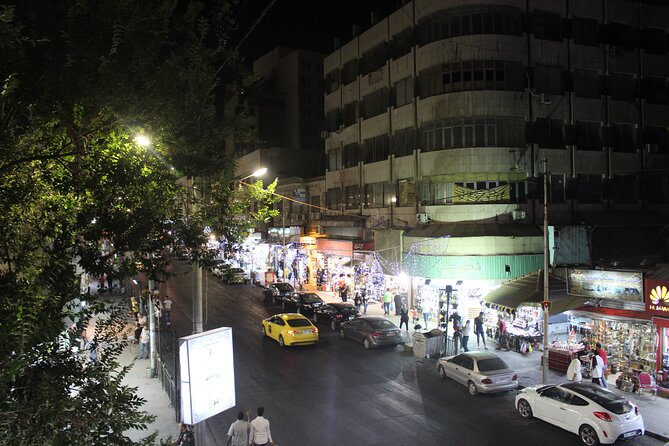
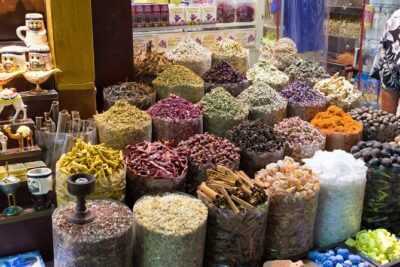
Basman Street brings more browsing into the route. You may visit spice shops, places where perfume is made or blended, stores selling traditional clothing, and souvenir shops.
The value here is the guide’s interpretation. A shop can look like a shop until someone explains what you are seeing, how a product is used, or how local buying habits differ from those at home. Guides also help with negotiation techniques, which can be useful in the markets.
Do not assume you will have time to shop extensively. The tour is designed as an overview, and the guide may move through several businesses in a short period. If you have a specific interest, such as spices, perfumes, or traditional clothing, mention it early so the private format can work in your favor.
This section is also where the price question becomes important. A private guide who helps you understand local customs and avoids confusion can be worthwhile. But if you only want to browse independently, you may feel that $49 per person is high for a walk through places you could enter on your own.
Ancient Amman from the street
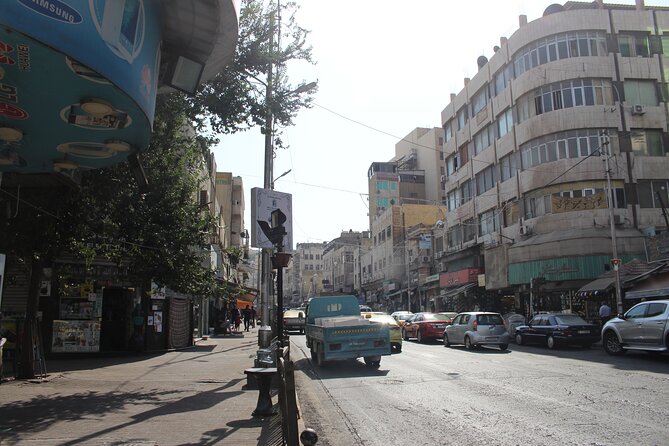
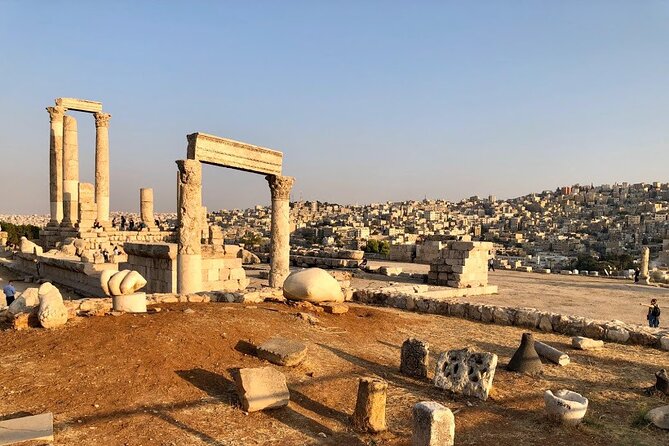
The final portion returns to Al Balad and passes the city’s major ancient landmarks. These include the Amman Citadel, Roman Theater, and Roman Nymphaeum.
The Roman Theater is one of Amman’s most recognizable sights. The Citadel sits above the downtown area, while the Nymphaeum adds another layer of Roman-era remains to the central district. Seeing these sites from the street helps you understand their location and gives you a useful route for a later visit.
But you should not confuse passing by with sightseeing inside. Entry to the Roman Theater and Citadel is not included. The tour is also not long enough to explore them properly. If these are your priorities, set aside separate time and buy the required admission independently.
This is a sensible design for some visitors. You get the city orientation first, then return to the archaeological sites with a better sense of how downtown fits together. Others will find it frustrating to hear about major monuments without entering them. Your expectations will decide whether this feels efficient or incomplete.
Guides, pace, and the private format
Guide quality is central to this experience. Orwah, also written as Orwa, is repeatedly praised for his friendliness, humor, enthusiasm, and ability to explain Amman in an easy way. He is also praised for practical tips about what to do later, where to eat, how to negotiate, and how to understand local customs.
Ibrahim is another guide associated with the experience and is described as charismatic and funny. The exact guide depends on the date and availability, so you should not assume Orwah will lead every departure.
The private arrangement gives you a better chance to adjust the conversation. You can ask about Jordanian communities, religion, food, shopping, or your onward plans. One particularly valuable aspect is the discussion of Amman as a home for people from Jordan, Palestine, Yemen, Syria, Egypt, and other places. That social context adds meaning to the market streets.
The pace can be fast. About two hours is common, with the overall duration listed as two to three hours. With six sections and many market lanes, the guide has a lot to cover. Wear good walking shoes and expect to spend much of the time on foot.
The meeting point is the Grand Husseini Mosque, and the stated end point is back at the meeting point. However, the practical route can vary. One person finished near the theater rather than returning to the starting area and found that useful. Confirm the ending point with your guide if you need to coordinate transport afterward.
What $49 buys you
The price is $49 per person. It includes a private local guide, bottled water, food samples, street food tastings, and the kunafa stop at Habibah Sweets. Group discounts may be available, which can improve the value for a larger private party.
For a couple or solo visitor, the price is harder to judge. You are paying for personal attention, interpretation, and food rather than entrance tickets. There is no transportation to Amman, no admission to the Citadel or Roman Theater, and no shopping budget included.
I see reasonable value if you arrive in Amman with little local knowledge and want a friendly person to explain the city. The food tastings and private questions add something beyond a self-guided walk. I see weak value if you want formal sightseeing, detailed architecture, or included monument entry.
Tips for the guide are not included. They are optional, not a required extra charge, but you may wish to budget for one if the service is excellent. The published price and gratuity should be considered separately when you calculate the full cost.
Who should book this walk?
This tour suits a first visit to Amman, especially on your first day or during your first few days. It can help you understand where downtown is, how the markets are arranged, what foods to try, and what places to return to later.
It is also a good match for solo visitors who want company and local guidance without joining a large group. Families and small private groups can benefit from the flexible questions and group pricing.
Food-minded visitors will get the most from the market produce, spices, sweets, and street samples. You may also appreciate it if shopping makes you nervous and you want help understanding prices and negotiation.
I would choose another activity if your main aim is the Citadel, Roman Theater, or a detailed study of historic buildings. You can still use this walk to locate those sites, but you will need a separate visit.
The tour is generally suitable for most participants, and service animals are allowed. Public transportation is nearby. Central Amman streets can be uneven and crowded, so comfortable shoes are more important than dress shoes.
Booking advice and cancellation terms
You receive confirmation when booking, and the experience offers a choice of departure times. That flexibility helps you fit the walk around a museum visit, meal, or other Amman plans. It is usually booked about three weeks ahead, so reserve early if your dates are fixed.
Free cancellation is available if you cancel at least 24 hours before the local start time. Cancellation within 24 hours is not refunded, and changes made inside that period are not accepted.
Should you book the Private Walking Tour in Amman?
Book it if you want a personal introduction to downtown Amman through markets, food, local customs, and conversation. Orwah and the other guides appear to be the experience’s greatest asset, and their advice can make the rest of your Jordan visit easier.
Do not book it expecting a full historic-site tour. The Citadel, Roman Theater, and Nymphaeum are part of the visual and conversational route, but the main work happens in the markets. At $49, the tour earns its keep through the private guidance and tastings, not through included admissions.
My practical choice would be to take this walk early in your stay, then visit the Citadel and Roman Theater afterward on your own. That combination gives you both sides of Amman: the ancient monuments and the working city below them.
FAQ
How long does the private walking tour last?
The tour lasts approximately two to three hours. Individual sections are scheduled for about 20 minutes, with the final downtown section taking about 40 minutes.
Where does the tour begin?
It begins at the Grand Husseini Mosque on King Talal Street 1 in Amman, Jordan.
Where does the tour end?
The stated end point is back at the meeting point. However, the route may sometimes finish near the Roman Theater, so confirm the final location with your guide if this matters for your plans.
Is the tour private?
Yes. Only your group participates in the activity.
Are the Amman Citadel and Roman Theater included?
No. The guide points out or passes these sites, but admission and an interior visit are not included. You are advised to visit them separately after the tour.
Is food included?
Yes. The price includes food samples and street food tastings, including a kunafa tasting at Habibah Sweets. Bottled water is also included.
Can I enter the Grand Husseini Mosque?
You may be able to enter if dressed appropriately, but entry is not guaranteed.
Do I need good walking shoes?
Yes. Good walking shoes are advised because the experience takes place on foot through downtown streets, markets, and back lanes.
What happens if I cancel?
You receive a full refund if you cancel at least 24 hours before the experience start time. Cancellations and changes made less than 24 hours before the start time are not accepted and are not refunded.
Just added in Amman
- From Amman :Private full day tour to Jerash ,Ajoune and Um Qais★ 5.0 · 12 reviews
- Queen Alia Airport Transfers From / To Amman, Petra, Dead Sea.★ 5.0 · 3 reviews
- airport pick up & transportations Services★ 5.0 · 15 reviews
- 2-Day Private Tour in Jordan – Deluxe Tent★ 5.0 · 9 reviews
- FROM AMMAN | Petra & Wadi Rum in one day | The Jordanian Mappers★ 5.0 · 12 reviews
- Amman Private City Tour With Local Lunch★ 5.0 · 2 reviews
- From Amman to West ( Madaba, Mt Nebo, baptism site and dead sea)★ 4.0 · 5 reviews
- Wadi Rum Full-Day Private Tour from Amman or Airport★ 5.0 · 2 reviews
Walking Tours, compared.
Amman Food Tours: 3-Hours Guided Walking Food Tour in Amman
Read our review →
Private Street Food and Walking Tour Amman Downtown
Read our review →
Day or Night Walking Tour in Downtown With Local
Read our review →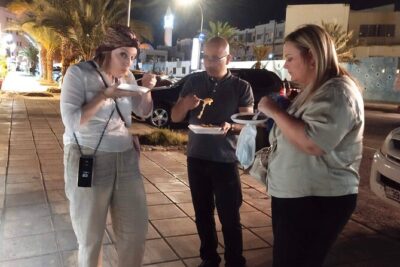
Walking Tour, Visit the Old Town and Markets, Taste Food
Read our review →
Private Walking Tour of Amman with Optional Street Food Experience
Read our review →Browse the lists this tour appears in