
Reviewed · JERASH AND AJLOUN TOURS
Private Tour, Jerash and Amman City Tour
Two ancient cities, one long day. This private outing works because it joins the sweeping Roman ruins of Jerash with Amman’s hilltop Citadel and downtown theater, giving you a useful first look at Jordan’s classical past. I especially like the private minivan, hotel pickup, and the freedom to set the pace with your own group.
I also like the choice of adding a local guide at Jerash. A driver such as Yusuf, Saadah, or Mohammad Bardaghawi may offer helpful background along the way, but the main consideration is clear: the standard experience is primarily private transportation with a driver, not a fully guided tour at every site.
In This Review
- Key points to know
- Why this private day works well
- The drive north from Amman
- Jerash: three hours among Roman streets
- The guide choice at Jerash
- Amman Citadel: history above the city
- Downtown Amman and the 6,000-seat Roman Theater
- Mosques, souks, and the living city
- Price, entry fees, and overall value
- Who should book this tour?
- Practical advice before you go
- Should you book the Jerash and Amman tour?
- FAQ
- How long does the Jerash and Amman tour last?
- Is hotel pickup and drop-off included?
- Are entrance fees included?
- Is a local guide included at Jerash?
- Is the tour private?
- Can I cancel for a full refund?
Key points to know
- Jerash takes about three hours: Allow time for Hadrian’s Arch, the Oval Colonnade, the Temple of Artemis, the South Theater, and the long Colonnaded Street.
- Amman’s Citadel gives you the city view: Roman, Byzantine, and early Islamic remains share this hilltop site.
- The Roman Theater is a separate downtown stop: The restored 2nd-century venue once held about 6,000 people.
- Private transport keeps the day flexible: You travel in an air-conditioned minivan with hotel pickup, drop-off, bottled water, and WiFi.
- Admission fees are extra: Check the option you select, and consider the Jordan Pass if it fits your wider Jordan itinerary.
- The local guide upgrade matters: Without it, you may get useful commentary from the driver, but site interpretation can be limited.
Why this private day works well
Jerash lies about 31 miles, or 50 kilometers, north of Amman. The drive takes roughly an hour, depending on traffic and your hotel location, so this is a full outing rather than a quick city add-on. The reward is a strong contrast: Jerash gives you open Roman streets and monumental ruins, while Amman brings ancient remains into the middle of a living capital.
I like the private format for this particular route. You are not waiting for a large group to finish photographs or shopping. You can spend more time at the Temple of Artemis, move on when the heat rises, or ask for a little more time at the Citadel.
The tour is advertised at about seven hours, with a possible range of five to eight hours. That range matters. The day can be compact if you make quick visits, or longer if you walk slowly through Jerash and add extra stops in Amman.
The vehicle is air-conditioned, and bottled water and WiFi are included. Those sound like small extras, but they are useful after several hours among exposed stone ruins. The tour is private, so only your own party participates.
More City Tours in Jerash and Ajloun
- Full Day Tour in Jerash and Amman City from Amman
★ 5.0 · 26 reviews - Private Full Day Jerash and Amman City Sightseeing Tour
★ 4.5 · 16 reviews - Full Day Tour in Jerash and Amman City
★ 5.0 · 15 reviews
The drive north from Amman
Pickup begins at your Amman hotel. From there, you ride north in a private minivan through Jordan’s craggy scenery toward Jerash. The journey is not the main attraction, but it gives you a break before the long walk through the archaeological site.
This is also where the quality of your driver can shape the day. Yusuf received praise for punctuality, site information, city advice, restaurant suggestions, and a comfortable vehicle. Mohammad Bardaghawi was noted for his friendly service and efforts to make the trip memorable. Other visitors specifically appreciated Mohammad’s humor, courtesy, and willingness to share details about local culture.
Do not assume every driver is a licensed guide. One direct comment makes the distinction important: Saadah was praised for speaking good English and being polite, but the experience was described as driver-only. If you want structured explanations among the ruins, add the local guide option at Jerash.
Jerash: three hours among Roman streets
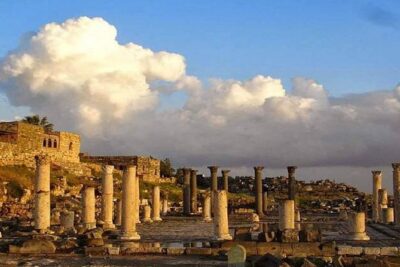
Jerash is the heart of the day. Often called the Pompeii of the East, it is one of the best-preserved Greco-Roman cities in the Middle East. The site grew into an important city under Roman rule and became one of the Decapolis cities of the eastern Roman world.
You enter through the area near Hadrian’s Arch, built around 130 AD to mark Emperor Hadrian’s visit. It is a fitting beginning because the arch gives you an immediate sense of scale. This was not a small provincial outpost. Its public buildings, ceremonial routes, theaters, fountains, and temples required serious money and organization.
The Hippodrome is another early stop. This sporting arena could hold about 15,000 spectators. Even if you are not interested in ancient athletics, its size helps you picture Jerash as a city built for crowds, competitions, processions, and public life.
From there, the route leads toward the Oval Forum, one of Jerash’s most memorable spaces. Its broad shape and surrounding columns create a powerful photograph, but the view is better understood as a civic meeting place rather than just a pretty ruin. The columns guide your eye toward the streets and hills beyond.
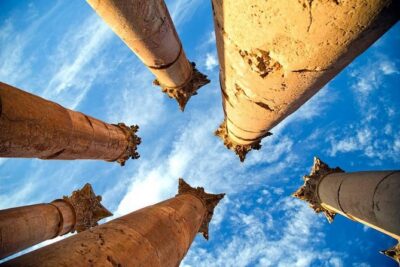
The Temple of Artemis is one of the site’s major highlights. Its Corinthian columns reach about 39 feet, or 12 meters, and the remains show how imposing a Roman temple could be. Artemis was a major local deity, and this temple held an important place in Jerash’s religious life.
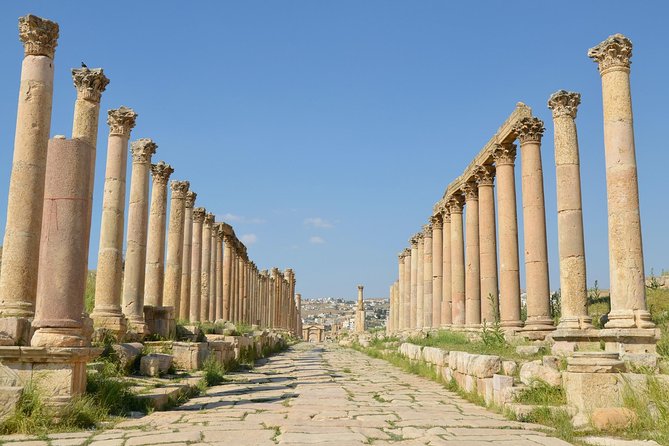
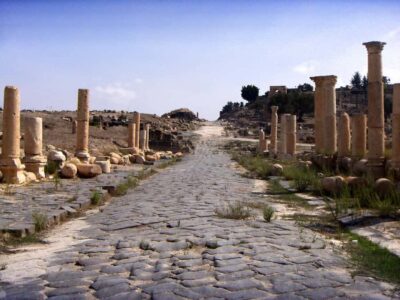
Next comes the Colonnaded Street, a long stone avenue that once connected important parts of the city. This is where comfortable footwear becomes useful. Jerash is not a quick roadside photo stop. You walk over uneven ancient surfaces, and the open site offers little shade.
Look for the Nymphaeum, the ornamental fountain that once supplied a decorative focus for the city. Water features were not merely practical. They also displayed wealth and engineering skill, especially in a place where water management mattered.
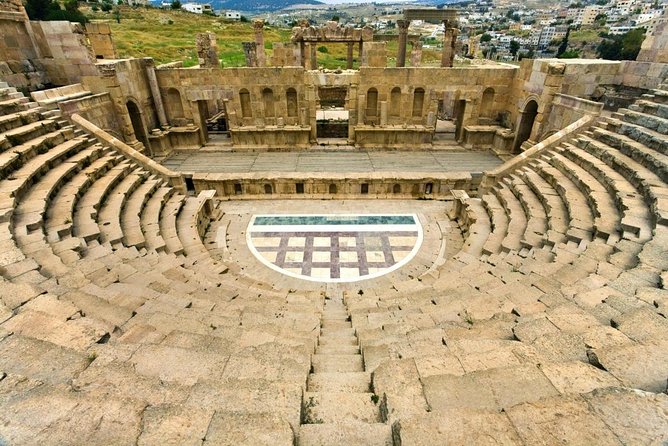
The South Theater adds another layer. Built in the 2nd century AD, it could seat about 5,000 people and is still used for concerts and performances. Its steep seating and stone stage area make it easier to imagine the sound and movement of an ancient audience. A musical demonstration with bagpipes in the theater was a memorable detail for one visitor, though performances are not guaranteed as part of the tour.
Three hours is a sensible amount of time for Jerash. You can cover the principal monuments without racing, but you may not have time to inspect every corner. The site is broad, and the main route involves walking in sun. If your group includes anyone who tires easily, tell the driver early that you prefer a measured pace.
The guide choice at Jerash
The optional local guide is the most important decision at booking. With a guide, you should have a clearer explanation of the city’s layout, religious buildings, theaters, and Roman development. Without one, you have more independence, but you will rely on posted information and whatever your driver explains before or after the visit.
There is a useful middle ground. Drivers such as Yusuf and Mohammad were praised for giving background on the places visited and answering questions. One driver also helped with local recommendations and conversation about Jordanian culture. Still, a friendly driver who knows the route is not automatically the same as a site guide.
I would choose the guide upgrade if Jerash is a major reason for your visit, especially if you enjoy archaeology or ancient architecture. If your priority is seeing the main monuments, taking photographs, and keeping the cost down, independent exploration may be enough.
More Jerash and Ajloun trips:
- Full-Day Tour: Umm Qais, Jerash, and Ajloun from Amman
★ 5.0 · 162 reviews - Private Tour of Ajlun and Jerash
★ 5.0 · 130 reviews - Jerash, Ajloun, Umm Qais Day Trip
★ 5.0 · 99 reviews - Half Day Tour To Jerash From Amman.
★ 4.9 · 90 reviews
Amman Citadel: history above the city
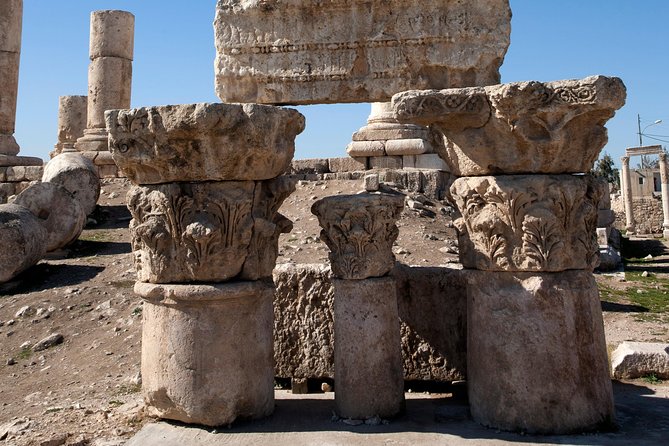
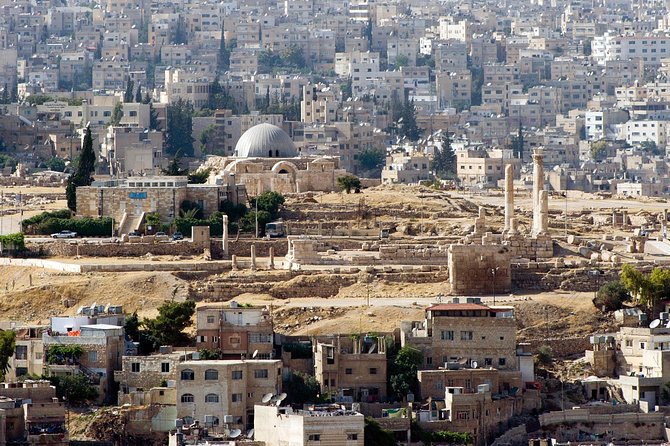
After Jerash, you return to Amman and climb to the Citadel, a hilltop site with wide views across the capital. Amman spreads across many hills, so this elevated position helps you understand the city’s shape before you descend into the center.
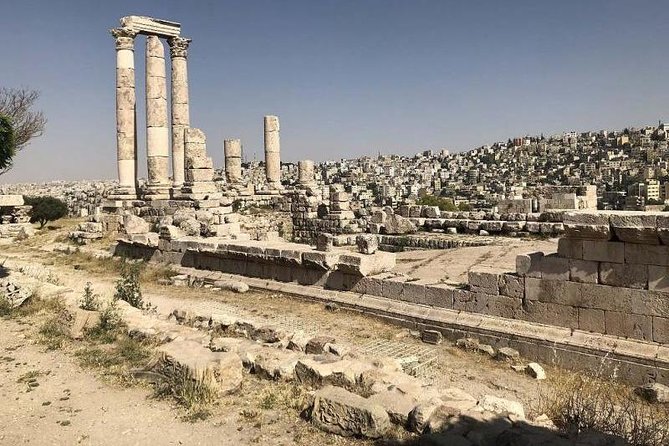
The Citadel contains remains from several periods, including Roman, Byzantine, and early Islamic occupation. The site is valuable because the layers sit together rather than in separate museums. You can move from a Roman temple to an Umayyad palace and see how the hill continued to matter long after the Roman period.
The Roman Temple of Hercules dates from the 2nd century. Its surviving columns and scattered stones suggest the original scale without pretending the building is complete. This is a place where a guide’s explanation can help you read the fragments.
The Umayyad Palace dates from the 8th century and includes a crumbled collection of royal buildings. Its presence reminds you that Amman’s story did not end with Rome. Islamic rulers reused and reshaped the same strategic hill.
The Archaeological Museum adds context by displaying classical and Islamic finds from across Jordan. After seeing large ruins at Jerash and the Citadel, the museum gives you smaller objects and artifacts to consider. It is a useful stop, though your available time may depend on the day’s pace and site hours.
The Citadel is one of the strongest parts of the itinerary for photographs, but the hilltop setting also means walking on uneven ground and slopes. Wear shoes with a firm sole, and take water even though the tour supplies bottled water.
Downtown Amman and the 6,000-seat Roman Theater
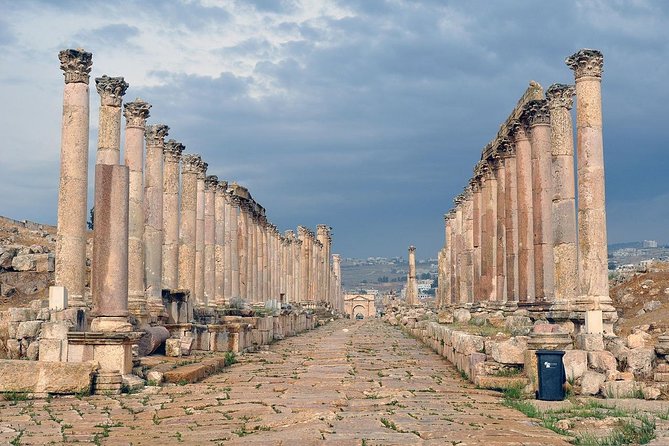
The Roman Theater is reached after the Citadel, in downtown Amman. Carved into the hillside of Jabal Al-Jozfah, it was built around 161 AD during the reign of Emperor Antoninus Pius.
The theater once seated about 6,000 people across 44 tiers of limestone seats. Climb only as high as feels comfortable, then turn around and look across the stage toward the city. The steep design was practical, helping large audiences see and hear performances from far up the slope.
The stage facade includes Corinthian columns and carved details. The structure later served other purposes, including use as a Christian church during the Byzantine period and a marketplace under Ottoman rule. That changing use gives the building more meaning than a simple Roman photo stop.
The scheduled visit here is about 30 minutes. That is enough to enter, view the seating, take photographs, and get a sense of the design. It is not enough for a long archaeological study. If the Roman Theater is important to you, confirm the day’s plan with your driver, since one unhappy account reported that this stop was missed.
The theater is listed as a separate stop from the Citadel, so do not assume that seeing one automatically guarantees substantial time at the other. A quick reminder at the start of the tour can help keep the full route on track.
Mosques, souks, and the living city
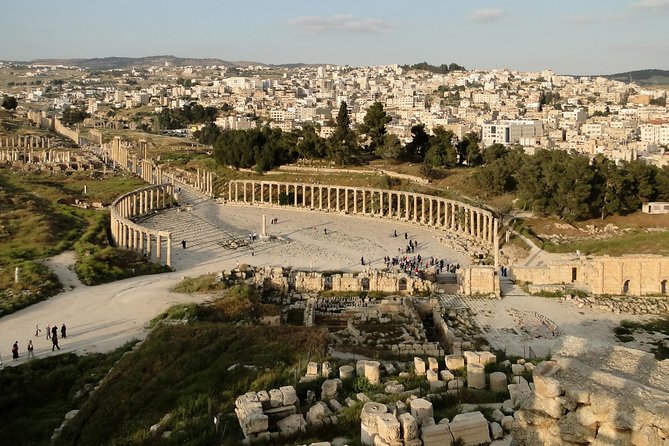
The Amman portion can include a closer look at traditional souks, and the itinerary also identifies the King Abdullah I Mosque as a city highlight. Its blue dome gives you a different view of modern Amman and its Islamic identity.
Some participants received an extra stop at the Blue Mosque from their driver. That kind of flexibility is one of the private tour’s advantages, but it should be treated as a possible courtesy rather than a guaranteed replacement for a listed stop.
The souks add a useful change of pace after the ruins. Instead of looking only at ancient stones, you see Amman as a working city with shops, local goods, spices, handicrafts, and everyday activity. Souq Jara is identified as a traditional marketplace with local items and food-related sights.
Shopping is not the main purpose of the tour, and the available time may be short. Still, even a brief walk through the market helps connect the ancient monuments with present-day Amman. I like having this final city element because it keeps the day from feeling like one long archaeology lesson.
Price, entry fees, and overall value
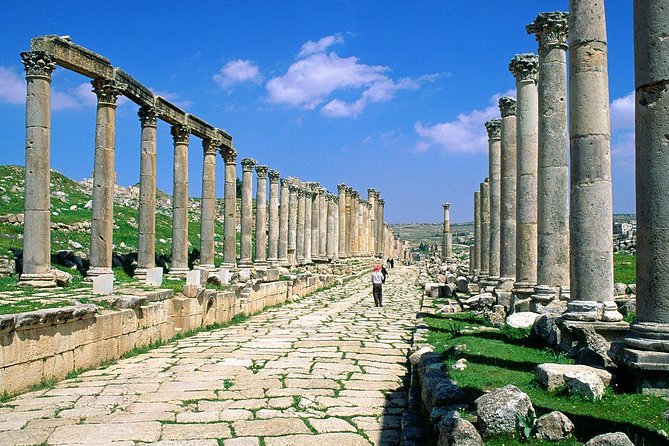
At $83 per person, the tour offers good value for a private outing if you are traveling with two or more people and want transport arranged from your hotel. The price covers private transportation, pickup and drop-off, bottled water, and WiFi on board.
Entry fees to the sites are not included in the standard information. The booking options may vary, so check exactly what you are selecting before payment. One practical suggestion from the experience is to consider the Jordan Pass if you plan to visit several paid sights in Jordan. It may reduce separate entrance costs, depending on your itinerary.
The tour becomes less economical for a solo visitor than for a small group because the price is listed per person, but you are paying for privacy and a dedicated vehicle rather than a shared coach. Group discounts are offered, which can improve the value for families or friends.
The optional guide is another cost decision. I would spend extra on it for serious interest in Jerash. Otherwise, the driver may provide enough general explanation for a first visit, especially if you are comfortable exploring ruins on your own.
Who should book this tour?
This is a strong choice for a first day in Amman. You see the capital’s main classical sights and make the essential trip to Jerash without arranging taxis, buses, or separate tickets yourself.
It also suits families and small groups. The private vehicle gives you control over breaks and pace, and the relaxed timing was praised in several accounts. Mohammed was specifically thanked for allowing plenty of time at each location and for being friendly, professional, and helpful.
History fans should add the local guide at Jerash. Independent visitors may prefer the basic option, especially if they already understand Roman city planning and want to wander freely.
This tour is less suited to anyone looking for a deeply guided archaeological experience from start to finish. It is also a demanding day for people who dislike sun, slopes, or uneven stone paths. The 5 to 8 hour range means you should keep the rest of your schedule flexible.
Practical advice before you go
- Confirm whether your price includes site admission.
- Decide in advance if you want the local guide at Jerash.
- Ask the driver to confirm Jerash, the Citadel, and the Roman Theater at the start.
- Wear practical walking shoes for uneven ruins and steep theater seating.
- Keep water close during the three-hour Jerash visit.
- Consider the Jordan Pass if you will visit several paid attractions.
- Use the private format to request a comfortable pace, not to cram in too many extra stops.
- Remember that the tour includes hotel pickup and drop-off, so give the provider your correct accommodation details.
Free cancellation is available up to 24 hours before the start time for a full refund. Changes or cancellations made less than 24 hours before the start time are not accepted for a refund, and cut-off times follow local time in Jordan.
Should you book the Jerash and Amman tour?
Book it if you want the main ancient sights covered in one private day, with transport handled and enough flexibility to avoid a rigid group schedule. The combination of Jerash’s Oval Forum, Temple of Artemis, and theaters with Amman’s Citadel and Roman Theater gives you a strong first picture of Jordan’s past.
I would choose the local guide upgrade if ancient sites are central to your trip. Otherwise, the standard private driver option offers a pleasant and practical introduction, especially when paired with a helpful driver such as Yusuf or Mohammad Bardaghawi.
Before confirming, check the admission arrangement and restate that you want the Roman Theater included. With those points clear, the tour is a sensible, well-priced way to connect Jerash and Amman in one day.
FAQ
How long does the Jerash and Amman tour last?
The tour is described as approximately seven hours, with an overall duration of about five to eight hours depending on the selected option and pace.
Is hotel pickup and drop-off included?
Yes. Hotel pickup and drop-off in Amman are included.
Are entrance fees included?
Entry fees are not included in the standard inclusions. Check the exact tour option you select, as some options may handle admission differently.
Is a local guide included at Jerash?
A local guide at Jerash is optional. You can select an option with a guide or explore the ruins independently.
Is the tour private?
Yes. Only your own group participates, and transportation is provided in a private vehicle.
Can I cancel for a full refund?
You can cancel up to 24 hours before the experience start time for a full refund. Cancellations or changes made less than 24 hours before the start time are not accepted for a refund.
Just added in Amman
- From Amman :Private full day tour to Jerash ,Ajoune and Um Qais★ 5.0 · 12 reviews
- Queen Alia Airport Transfers From / To Amman, Petra, Dead Sea.★ 5.0 · 3 reviews
- airport pick up & transportations Services★ 5.0 · 15 reviews
- 2-Day Private Tour in Jordan – Deluxe Tent★ 5.0 · 9 reviews
- FROM AMMAN | Petra & Wadi Rum in one day | The Jordanian Mappers★ 5.0 · 12 reviews
- Amman Private City Tour With Local Lunch★ 5.0 · 2 reviews
- From Amman to West ( Madaba, Mt Nebo, baptism site and dead sea)★ 4.0 · 5 reviews
- Wadi Rum Full-Day Private Tour from Amman or Airport★ 5.0 · 2 reviews
Jerash and Ajloun Tours, compared.
Full-Day Tour: Umm Qais, Jerash, and Ajloun from Amman
Read our review →
Private Jerash, Ajloun Castle, and Umm Qais Tour
Read our review →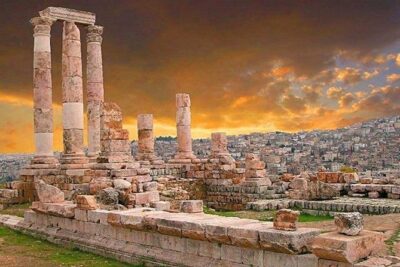
Browse the lists this tour appears in