
Reviewed · JERASH AND AJLOUN TOURS
Full-Day Tour: Umm Qais, Jerash, and Ajloun from Amman
Northern Jordan packs a lot into one long day. This private trip links Jerash’s Roman ruins, Ajloun Castle, and the hilltop remains of Umm Qais, with a driver, hotel pickup, bottled water, onboard Wi-Fi, and private transport included. I like the range: you get classical streets and temples, a medieval fortress, and wide views toward the Golan Heights, Lake Tiberias, and the Jordan Valley.
I also like the freedom to choose a local guide at the sites rather than being tied to one group all day. Drivers such as Hassan, Mohammad, Yousef, Amer, and Hani have been praised for punctual service, useful local advice, and flexible pacing. The main concern is time. A six to eight-hour day covering three distant sites can feel rushed, especially if you want to give Jerash the three hours it deserves.
In This Review
- Key points before you book
- Why this northern Jordan route is worth your time
- Jerash: give the Roman city the time it deserves
- Ajloun Castle: a sharp change from Roman stone
- Umm Qais: ruins with a wide northern view
- The driver can make or break the day
- Guides, entrance fees, and how to manage the extras
- Timing, comfort, and practical limits
- Who should book this tour?
- FAQ
- How long does the tour take?
- Where does pickup take place?
- Where does the tour end?
- Is this a private tour?
- How many people can share the vehicle?
- Is transportation included?
- Is Wi-Fi available?
- Are entrance fees included?
- Is a local guide included?
- Can I cancel for a full refund?
- Should you book the Umm Qais, Jerash, and Ajloun tour?
Key points before you book
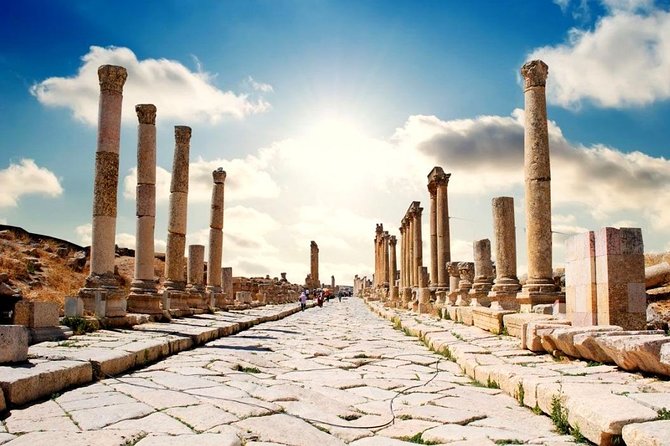
- Jerash is the main event: Allow as much time as possible for the Oval Colonnade, Hadrian’s Arch, theaters, temples, and long Colonnaded Street.
- Umm Qais brings the best views: The ancient city sits above the Jordan Valley, with sight lines toward Lake Tiberias and the Golan Heights.
- Ajloun adds a different chapter: Its 12th-century fortress gives the day a strong medieval Arab-Islamic counterpoint to the Roman ruins.
- Private transport keeps the day flexible: Your group has its own vehicle and can choose a central Amman pickup and drop-off point.
- Guides and entrance fees cost extra: Admission is not included, and local guiding is optional or arranged separately depending on the site.
- Plan for a long road day: The stated duration is about six to eight hours, so three stops require sensible expectations.
Why this northern Jordan route is worth your time
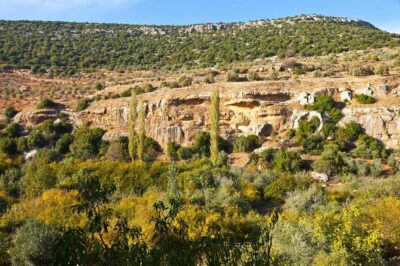
Amman is a useful base, but Jordan’s northern sites show a different side of the country. The roads lead into greener, more mountainous country around Ajloun, then farther north to Umm Qais. Along the way, your English-speaking driver can explain the areas you pass through and answer questions about modern Jordanian life.
The route works because each stop has a clear identity. Jerash is grand and Roman, Ajloun is defensive and medieval, and Umm Qais combines ruins with an open hilltop setting. You are not looking at three versions of the same archaeological site.
The private format matters. You are not waiting for a large bus or following a fixed group through every doorway. If you prefer to wander alone, you can do that. If you want help understanding what you are seeing, you can arrange a local guide, particularly at Jerash, where the site is large and its remains can blur together without context.
The price is listed at $89 per person, while the tour is also described as priced per vehicle for up to three passengers. That makes the value depend on how many people are in your party and how the final booking price is displayed. For three people sharing the vehicle, private transport can be good value. For one person, admission fees and any guide costs make the total higher than the headline figure.
More Jerash and Ajloun trips:
- Private Tour of Ajlun and Jerash
★ 5.0 · 130 reviews - Jerash, Ajloun, Umm Qais Day Trip
★ 5.0 · 99 reviews - Half Day Tour To Jerash From Amman.
★ 4.9 · 90 reviews
Jerash: give the Roman city the time it deserves
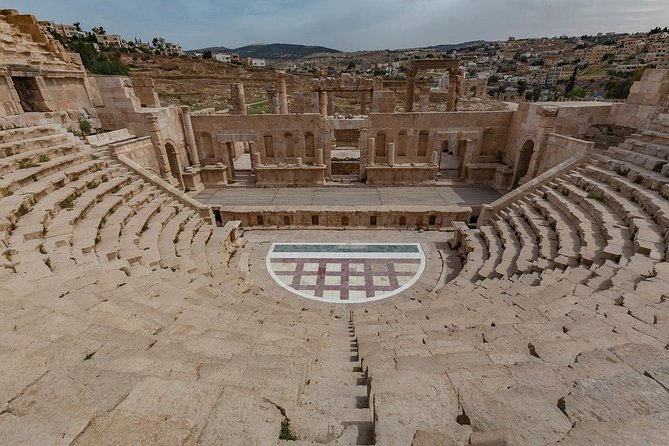
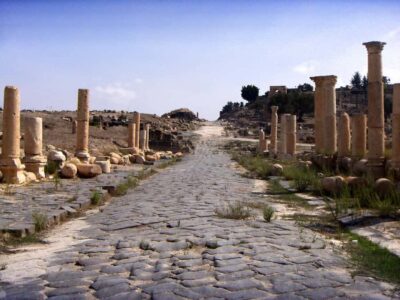
Jerash is the reason to take this trip. Founded around 331 BC and later developed under Greek and Roman rule, it became one of the Decapolis cities of the eastern Roman world. The surviving site is broad, formal, and unusually easy to read.
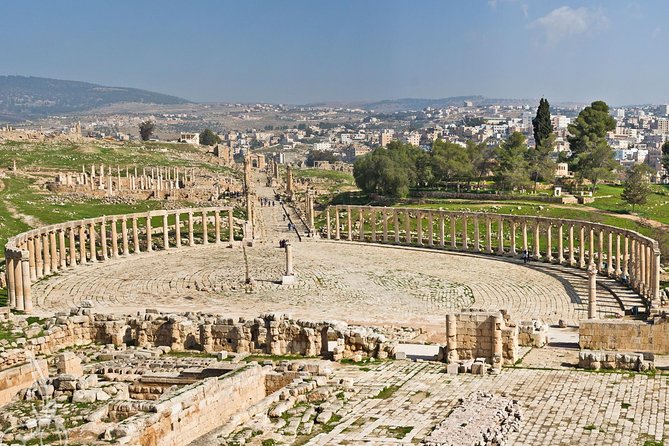
You enter through the area near Hadrian’s Arch, built in the second century. From there, the route opens toward the Hippodrome, a large arena once able to hold about 15,000 people. Even if you are not an expert in ancient architecture, the scale helps you understand that Gerasa was a serious city, not a minor provincial outpost.
The Oval Colonnade is the visual centerpiece. Its curved shape frames the space and gives the ruins a sense of order. From here, the Colonnaded Street leads you through rows of weathered columns toward temples, plazas, bathhouses, and other remains.
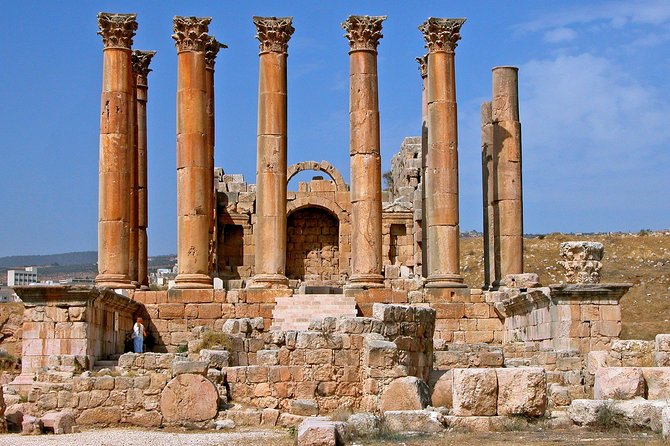
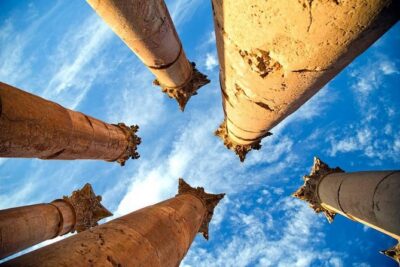
The Temple of Artemis is another key sight. Its Corinthian columns are among the most memorable pieces of the site, while the Archaeological Museum presents objects found during excavations. The combination of open ruins and museum displays helps connect the surviving stonework with ordinary life in the ancient city.
I strongly favor arranging a guide at Jerash if you have never visited a large classical ruin. A local guide can explain which buildings mattered, how the streets fit together, and what you are looking at beyond a line of columns. One especially well-regarded guide, Hakam Zatayma, has been praised for clear English, strong knowledge of the area, and an engaging manner. The guide is not automatically part of the basic price, so confirm the arrangement before you go.
The stated stop is two hours, but that is tight. One past visitor felt the published timings were misleading, while another advised taking three hours at Jerash and carrying plenty of water. That is sound advice. You will be walking over exposed ancient streets, stopping for photographs, and climbing or changing direction often.
If the day begins to run late, Jerash is the place where you should protect your time. Ajloun Castle is compact by comparison, and Umm Qais can be shortened. Cutting Jerash down to a quick circuit means missing the best part of the trip.
Ajloun Castle: a sharp change from Roman stone
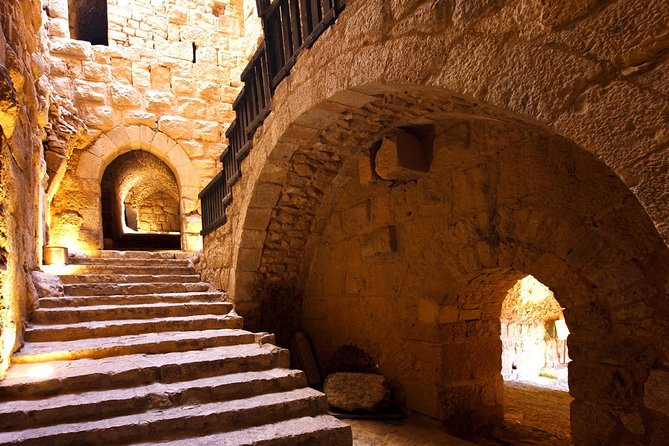
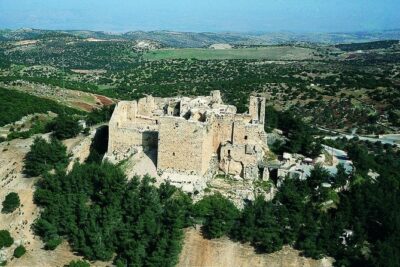
After Jerash, the route continues to Ajloun Castle, also called Qala’at ar-Rabad. This 12th-century fortress was built by forces linked to Saladin to guard against Crusader incursions and to control three important passages into northwestern Jordan.
The castle is a strong contrast to Jerash. Instead of open colonnades and broad plazas, you find thick defensive walls, towers, corridors, and enclosed rooms. Its hilltop position is practical as well as scenic. The builders wanted control of the surrounding routes, and the location makes that purpose easy to grasp.
Inside, you can look through the castle’s rooms and towers and visit the small museum. The site is not huge, and the planned stop is about 45 minutes. That is usually enough for a focused visit, though you may want longer if you enjoy military architecture or want time for the views.
The castle also gives you a break from the Roman material. Jordan’s story did not end with antiquity, and Ajloun adds the medieval period without requiring a separate day. I like that balance. You leave the site with a better sense of how power, trade, and defense shaped the region at different times.
The drawback is that 45 minutes can pass quickly if you stop often for photographs. The hilltop setting makes it tempting to linger, but the driver still has to take you north to Umm Qais and then back to Amman. If you are already behind schedule, keep the castle visit focused rather than trying to see every corner.
Umm Qais: ruins with a wide northern view
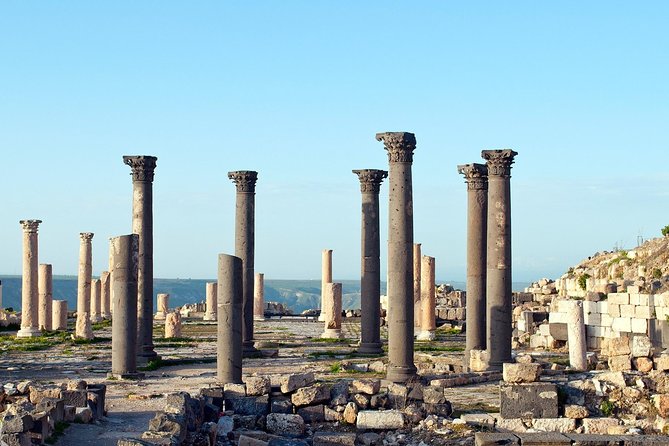
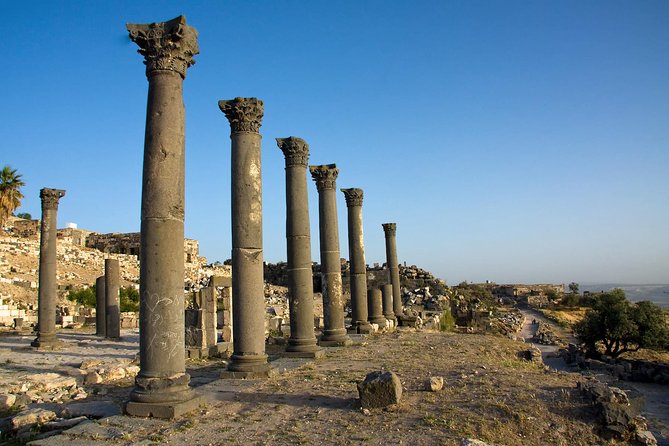
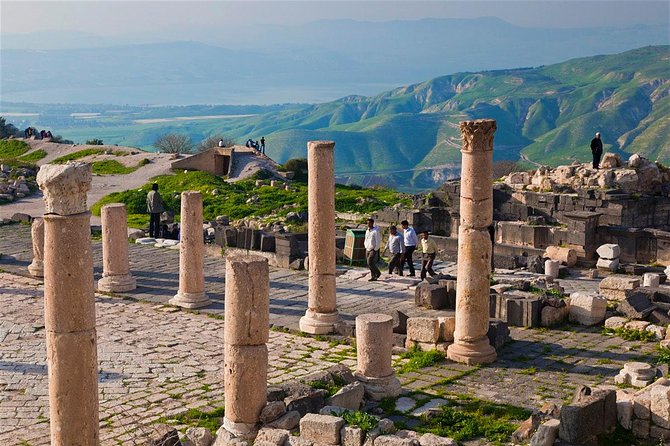
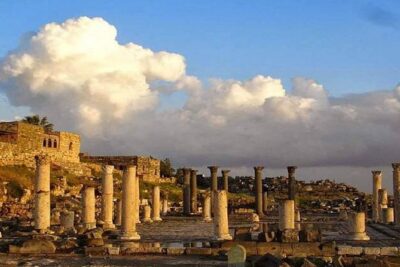
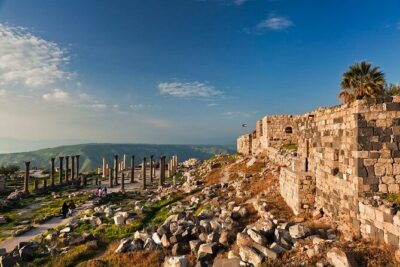
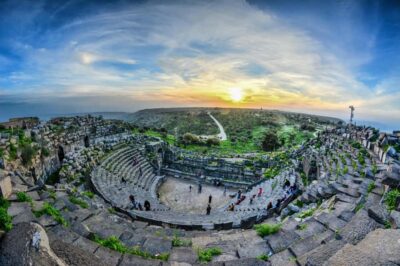
Umm Qais is the most atmospheric stop. The remains belong to the ancient Greco-Roman city of Gadara, which was part of the Decapolis. The ruins spread across a hillside, and the setting gives this site a different feel from enclosed Jerash.
The views are a major reason to come. From the hill, you can look toward the Golan Heights, Lake Tiberias, and the Jordan Valley. The broad outlook helps explain why this location mattered, and it gives you a memorable pause after the denser architecture at Jerash.
The archaeological remains include a mausoleum, basilica terrace, theaters, plazas, and other Greco-Roman structures. There is also the Archaeological Museum of Umm Qais, included as a planned stop of about 45 minutes without admission. The museum can help you get oriented before walking among the ruins.
I would approach Umm Qais with the right expectation. It is not another Jerash. The remains are more scattered, and the main pleasure comes from the combination of stonework, open space, and views. If you want a dramatic setting and a quieter archaeological visit, it may become your favorite stop.
The location also makes timing important. Umm Qais is the farthest point on the route, so the return to Amman can feel long if you reach it late in the day. One party chose not to visit the final stop because of time, although the driver offered to continue. That example is useful: the route is possible, but delays, long visits, or an unplanned meal can force a choice.
More Umm Qais trips:
- From Amman: Private Jerash, Ajloun Castle, and Umm Qais Tour
★ 4.9 · 82 reviews - From Amman: Private Full Day Tour Jerash Ajloun & Um Qais
★ 5.0 · 77 reviews - Day Tour Jerash, Ajloun and Umm Qais From Amman
★ 5.0 · 54 reviews - Private Day Trip to Jerash, Umm Qais and Ajloun Castle from Amman
★ 5.0 · 51 reviews
The driver can make or break the day
Your driver is more than a person behind the wheel. On a route with three major stops, punctual pickup, safe driving, clean transport, and good communication shape the entire experience.
Several drivers have been praised for calm, friendly service. Hassan Al-Khateb received particular praise for a spacious, comfortable vehicle, helpful recommendations, and small personal touches such as local coffee and food suggestions. Yousef was also praised for helping locate an ATM when a banking problem came up. Amer was appreciated for giving advice without pushing restaurants, guides, or extra stops.
Hani has been praised for sharing useful information during the drive, especially for someone interested in Middle Eastern history. Mohammad has been noted for tailoring the day to a group’s wishes, while another driver known as Mo was praised for making passengers feel safe and cared for.
These details matter because the time between sites is part of the experience. A good driver can explain what you are passing, answer questions, and help you decide where to spend the remaining time. The vehicle is also your quiet place to rest between walks, so onboard Wi-Fi, bottled water, and a modern, clean car are worthwhile additions.
There is one serious warning in the feedback. One customer reported unsafe driving, speeding, phone use, navigation problems, and a poorly maintained vehicle. That account is very different from the many positive comments about professional drivers, but it should not be ignored. If your driver behaves unsafely, speak up at once and contact the provider or booking company. A scenic day is never worth a dangerous ride.
Guides, entrance fees, and how to manage the extras
The basic experience includes private round-trip transportation, fuel surcharge, hotel pickup and drop-off, an English-speaking driver, bottled water, and Wi-Fi onboard. Local guides and entrance fees are not generally included.
That setup suits independent visitors who want transport without a full-time guide. You can walk through the smaller sites at your own pace and arrange guidance where it helps most. In my view, Jerash is the clear priority for a guide because of its size and the number of buildings.
At Ajloun and Umm Qais, you may prefer to explore independently. Ajloun is compact and visually clear, while Umm Qais rewards slow wandering and stopping at viewpoints. Still, the quality of local guiding can add meaning, especially if you want more than photographs.
Carry a way to pay entrance fees, and remember that the tour price does not cover them. The exact cost is not provided here, so you should confirm current admission charges before departure. The same applies to any restaurant stop or optional guide.
Timing, comfort, and practical limits
The tour is advertised as lasting about six to eight hours. That is a broad window, and the route needs flexibility. Pickup time, traffic, the length of your visits, and time spent eating all affect the return to Amman.
The planned stop lengths are approximately:
- Umm Qais Archaeological Museum: 45 minutes
- Ajloun Castle: 45 minutes
- Jerash ruins: 2 hours
Those figures describe a brisk day. They do not leave much room for a long lunch, extended museum time, or a slow walk through Jerash. If you are passionate about archaeology, ask in advance how much control you have over the schedule.
Wear comfortable shoes and bring sunscreen. One person specifically praised the pleasant weather but still advised sun protection. Carry water even though bottled water is provided, especially if you want to spend longer at Jerash.
The route is private, so it works well for couples, families, or a small group of friends who value control over the day. Most people can participate, but the experience involves walking around archaeological sites, uneven ground, and castle corridors. Anyone with mobility concerns should ask the provider for more detail before booking, since the supplied tour information does not give a full accessibility description.
Who should book this tour?
I would choose this trip if you have limited time in Amman and want to see three important northern Jordan sites in one day. It is especially useful for first-time visitors who do not want to arrange separate transport or navigate the route alone.
It also suits you if you prefer a private vehicle, want an English-speaking driver, and like the option of adding a local guide only where needed. The drivers’ personal suggestions and flexibility can make the long road sections more pleasant.
I would hesitate if you dislike early starts, long drives, or brisk sightseeing. You may also prefer separate day trips if Jerash is a top priority and you want three hours or more there without pressure. The route is ambitious, and the price rises once you add admission and guide fees.
Free cancellation is available if you cancel at least 24 hours before the local start time. Changes or cancellations inside that window are not accepted for a refund.
FAQ
How long does the tour take?
The tour lasts approximately six to eight hours.
Where does pickup take place?
Pickup is offered from your hotel or another central location of your choice in Amman.
Where does the tour end?
The driver returns you to Amman and can drop you at a central location of your choice.
Is this a private tour?
Yes. Only your group participates in the activity.
How many people can share the vehicle?
The price is based on a maximum of three passengers per vehicle.
Is transportation included?
Yes. Private round-trip transportation, fuel surcharge, hotel pickup and drop-off, and an English-speaking driver are included.
Is Wi-Fi available?
Yes. Wi-Fi is provided onboard.
Are entrance fees included?
No. Admission fees at the archaeological sites and castle are at your own expense.
Is a local guide included?
A local guide at Jerash is available if selected. Local guides and guide services at the sites are otherwise described as an additional expense.
Can I cancel for a full refund?
Yes, if you cancel at least 24 hours before the experience start time. Cancellations made less than 24 hours in advance are not refunded.
Should you book the Umm Qais, Jerash, and Ajloun tour?
Book it if you want maximum northern Jordan coverage in one private day. Jerash delivers the grand Roman ruins, Ajloun adds a medieval fortress, and Umm Qais brings the most memorable views. The drivers are often praised for being kind, punctual, helpful, and flexible, which is a real advantage on a demanding route.
Before paying, confirm the final price, entrance fees, guide arrangements, vehicle capacity, and how much time you can expect at Jerash. If the operator can protect three hours there, this is a strong day trip from Amman. If the schedule is fixed at the shorter end of the range, expect a useful overview rather than a slow, thorough visit.
Just added in Amman
- From Amman :Private full day tour to Jerash ,Ajoune and Um Qais★ 5.0 · 12 reviews
- Queen Alia Airport Transfers From / To Amman, Petra, Dead Sea.★ 5.0 · 3 reviews
- airport pick up & transportations Services★ 5.0 · 15 reviews
- 2-Day Private Tour in Jordan – Deluxe Tent★ 5.0 · 9 reviews
- FROM AMMAN | Petra & Wadi Rum in one day | The Jordanian Mappers★ 5.0 · 12 reviews
- Amman Private City Tour With Local Lunch★ 5.0 · 2 reviews
- From Amman to West ( Madaba, Mt Nebo, baptism site and dead sea)★ 4.0 · 5 reviews
- Wadi Rum Full-Day Private Tour from Amman or Airport★ 5.0 · 2 reviews
Jerash and Ajloun Tours, compared.
Private Jerash, Ajloun Castle, and Umm Qais Tour
Read our review →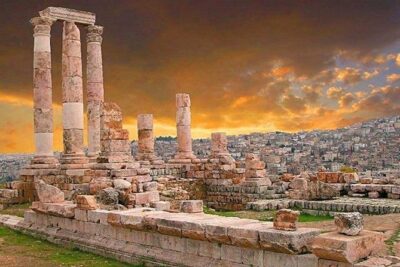
Browse the lists this tour appears in