Reviewed · PRIVATE
Half Day Private Tour to Iraq al-Amir (Qasr al-‘Abed)
History is close to Amman. This four-hour private trip takes you to Iraq al-Amir, or Caves of the Prince, where more than 10 caves were used by different groups from the Copper Age onward. I like the mix of quiet village setting and unusual archaeology, and I like that you travel in a private, air-conditioned vehicle rather than joining a large group.
The main consideration is that your driver is described as English-speaking, not as a specialist archaeological guide. You will get transport, water, coffee, and tea, but you may want to ask in advance how much historical explanation will be provided during the visit.
For $55 per person, the tour offers a sensible way to reach a site just outside Amman without arranging a car yourself. Free admission helps the value, while pickup and group discounts make the price more attractive for families or small groups.
In This Review
- Key Points Before You Book
- Why Iraq al-Amir Makes a Good Half-Day Trip
- Reading the Caves at Iraq al-Amir
- Qasr al-Abed and the Story of Hyrcanus
- What the Private Vehicle Adds
- Is $55 Per Person Good Value?
- How to Plan Your Four Hours
- Who Will Enjoy This Experience Most?
- Booking, Cancellation, and Practical Questions
- Should You Book the Iraq al-Amir Tour?
- FAQ
- Where does the tour depart from?
- How long does the tour last?
- Is the tour private?
- What is included in the price?
- Is admission to Iraq al-Amir included?
- What is Qasr al-Abed?
- Can most people participate?
- Can I cancel for a full refund?
Key Points Before You Book
- More than 10 ancient caves give Iraq al-Amir a character unlike Amman’s better-known city sights.
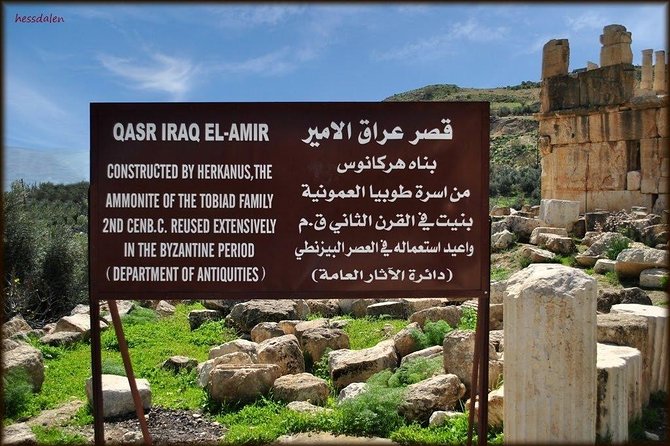
- Qasr al-Abed is linked to Hyrcanus, governor of Ammon, and dates to the 2nd century BCE.
- A private air-conditioned vehicle gives your group its own schedule and avoids a crowded coach.
- The four-hour duration works well as a half-day outing from Amman.
- Coffee, tea, and bottled water are included, a small but welcome touch in Jordan’s warm climate.
- The tour is praised for polite, helpful service, though only one written rating is available, so the feedback is encouraging but limited.
Why Iraq al-Amir Makes a Good Half-Day Trip
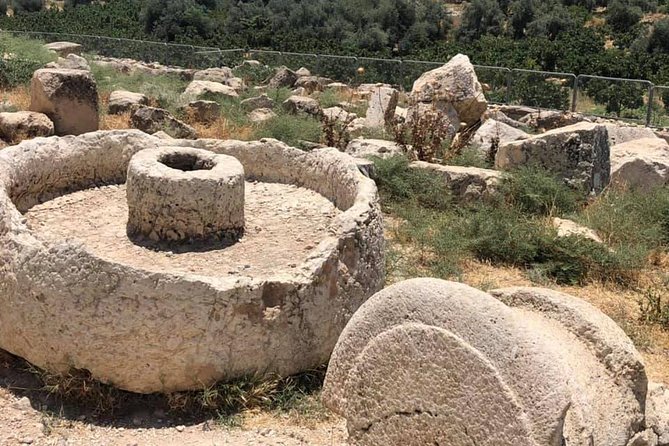
Iraq al-Amir sits in Wadi Al-Seer, in the hills just outside Amman. The setting is a change of pace from the capital’s roads, buildings, and traffic. You are still close to Amman, but the visit turns toward stone, caves, and the remains of an ancient settlement.
The Arabic name means Caves of the Prince. That name gives you a useful clue about the place. The site is not one single monument with a neat entrance, grand avenue, and polished museum displays. Instead, it is a collection of old spaces cut into or formed within the hills, along with the remains of a large ancient castle.
I like this kind of stop because it asks you to look closely. The caves are not all alike. One has what appear to be stone seats, perhaps arranged for a meal or meeting. Another is divided by low stone walls into small spaces about the length of a lying adult, giving it a more tomb-like appearance. A third has a high ceiling and carved walls around a broad room that may once have housed several families.
Those details make the site more engaging than a quick photo stop. You can compare the different spaces and think about how people may have used them. At the same time, the exact purpose of some areas is not fully explained in the information provided, so you should treat interpretations as possibilities rather than fixed facts.
A few more Amman days worth comparing
- Amman: Petra, Wadi Rum, and Dead Sea 2-Day Tour
★ 4.9 · 1,173 reviews - 2-Day Tour: Petra, Wadi Rum, and Dead Sea from Amman
★ 5.0 · 1,141 reviews - From Amman: Petra & Wadi Rum Private or group Day Tour
★ 4.9 · 750 reviews
Reading the Caves at Iraq al-Amir
The more than 10 caves are the heart of the visit. They were inhabited by various groups beginning in the Copper Age, which gives the site a very long human story. People used these spaces over many periods, for homes, gatherings, storage, burial-related purposes, or other needs that are not always clear today.
One cave appears suited to communal use because of its built-in seating. Imagine a group gathering in a stone room rather than a modern hall. That simple detail helps you connect the archaeological remains with ordinary life.
Another cave has low stone divisions that create narrow compartments. Their shape gives the room a solemn feel, though the exact use is not confirmed in the available information. You can see why a local guide or a well-prepared driver could add real value here by explaining which ideas are accepted and which remain uncertain.
The third described space is especially striking because of its high ceiling and carved walls. It seems large enough to have sheltered several families. I would spend time looking at the scale of the room, the shape of the walls, and the way the cave differs from the more divided spaces nearby.
The caves are no longer permanently inhabited. Shepherds may occasionally use them, which keeps a link with practical rural life rather than turning the site into a completely preserved archaeological display. That also means you should approach the area with respect and avoid treating every space as a prop for photographs.
The available details do not specify how much walking is required, the exact condition of the paths, or whether every cave can be entered. If you have mobility concerns, ask Al Rayan Tours before booking. The general information says most people can participate, but that does not provide a detailed description of cave access.
Qasr al-Abed and the Story of Hyrcanus
The second major part of the visit is Qasr al-Abed, whose name means Palace of the Slave in Arabic. The remains are described as an Ozymandian castle, suggesting a huge and imposing structure now reduced to ruins.
Qasr al-Abed was built by Hyrcanus, the governor of Ammon, in the 2nd century BCE. That date places the building in the Hellenistic period, when rulers across the eastern Mediterranean used grand architecture to display power and status.
The contrast between the castle ruins and the caves gives the half-day tour its shape. The caves show spaces connected with long-term human use, while Qasr al-Abed represents authority, ambition, and monumental construction. You get both the intimate and the grand sides of the site.
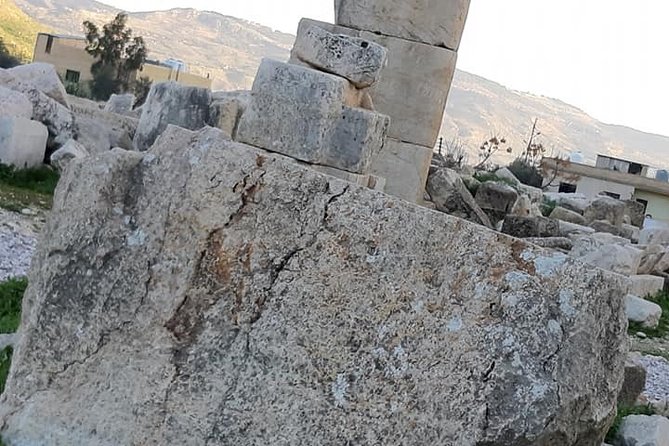
Do not expect a complete palace with intact rooms and restored decoration. The appeal is in imagining the scale of what once stood here and reading the surviving stone. The supplied description does not give a full list of architectural features, so I would avoid arriving with expectations of a fully preserved fortress or palace complex.
This is also where the quality of the explanation matters. An English-speaking driver can help you move between the sites and answer basic questions, but the tour does not promise a dedicated archaeologist or licensed specialist. If ancient architecture is your main interest, ask whether the driver provides detailed commentary on Hyrcanus, Ammon, and the castle.
What the Private Vehicle Adds

A private, air-conditioned vehicle is one of the clearest benefits of this experience. You travel only with your own group, so you do not have to match your pace to strangers or wait for a large coach to fill and unload.
Pickup is offered, which simplifies the start of the day. The tour is based in Amman, and Iraq al-Amir is outside the city in Wadi Al-Seer. Having transport arranged is useful if you do not want to negotiate a taxi, rent a car, or work out the route yourself.
The private format also gives you room to ask questions and request a little more time at a cave or ruin. The information does not promise a fully flexible schedule, so you should confirm the pickup point and timing. Still, a private half-day generally feels less rigid than a group excursion.
Air conditioning matters in Jordan, particularly when you have spent time outdoors. Bottled water is included, along with coffee and tea. These are modest extras, but they mean you do not need to organize every drink before leaving Amman.
The tour is also listed as being near public transportation. That may help you reach a pickup point if needed, though pickup is offered and the exact arrangement should be confirmed directly with the provider.
A completely different kind of day out:
- From Amman: Petra and Wadi rum Full day Tour
★ 5.0 · 538 reviews - 2-Day Petra, Wadi Rum and Dead Sea Tour from Amman
★ 5.0 · 467 reviews - 3-Day Private Tour from Amman: Petra, Wadi Rum, Dana, Aqaba, and Dead Sea
★ 5.0 · 425 reviews - Petra Full-Day Private Tour from Amman
★ 4.9 · 392 reviews
Is $55 Per Person Good Value?
At $55 per person, this tour is not simply charging for entrance to a monument. Admission to the site is free. You are paying mainly for the private vehicle, driver, pickup service, time, and convenience of having the outing arranged for you.
For one person or a couple, the cost may feel higher than taking local transport independently. You would need to weigh that saving against the time and effort of planning the route and arranging a return trip. The private format becomes more appealing when several people share the vehicle, especially since group discounts are available.
The value is strongest if you want a straightforward half-day from Amman. You can leave the driving to someone else, stay in an air-conditioned car, and visit a place that would be easy to overlook without transport.
The value is less certain if you want extensive archaeological interpretation. The included service is an English-speaking driver, not specifically an English-speaking tour guide. Ask what commentary is included before you book, especially if you want a detailed explanation at each cave and at Qasr al-Abed.
The one written assessment available is highly positive about the service, describing the people as nice, helpful, polite, and hospitable. That is useful confirmation of the human side of the experience, but it is based on a very small amount of feedback. I would treat it as an encouraging sign, not a guarantee of every detail.
How to Plan Your Four Hours
The stated duration is about four hours. That is long enough to make Iraq al-Amir a proper outing rather than a rushed photograph beside a ruin, but short enough to fit into a morning or afternoon in Amman.
You should keep the day simple. Wear shoes suited to visiting old stone areas, and bring any personal items you need for time outdoors. Bottled water is supplied, and coffee or tea is included, but the information does not mention a meal or snacks.
Use the time to look rather than rush. At the caves, compare the seating area, the divided compartments, and the larger high-ceilinged room. At Qasr al-Abed, take a moment to consider the difference between a building made for communal or domestic use and one created to project the power of a governor.
Because the exact order and timing are not given, confirm how long you will spend at each stop. You should also ask whether the vehicle can wait while you explore and what happens if you need extra time at the caves.
The tour is commonly booked well ahead, with an average booking lead time of 89 days. That figure does not tell you that every date sells out, but it does suggest that planning early is sensible if you have fixed dates in Amman.
Who Will Enjoy This Experience Most?
I would recommend this outing to anyone who has already seen some of Amman and wants a quieter historical stop nearby. It suits people who enjoy unusual ruins more than polished museum exhibits.
Families may appreciate the private vehicle and the freedom to keep the group together. The caves also give children something concrete to examine: seats cut into stone, small divided spaces, and a large room that invites questions about how people lived.
It can also suit couples or small groups who want a half-day without committing to a full-day excursion. The four-hour schedule leaves time for other plans in Amman.
History-focused visitors should consider the limits. The site has substantial archaeological interest, but the experience does not promise a specialist guide, a museum presentation, or a long lecture. If you are happy to explore with basic assistance and your own curiosity, the tour should work well. If you need detailed academic interpretation, ask questions before confirming.
People with mobility limitations should also check the cave access and walking conditions directly. Most people can participate according to the available information, but no detailed accessibility description is provided.
Booking, Cancellation, and Practical Questions
You receive confirmation at the time of booking. The activity is private, and only your group participates. Free cancellation is available if you cancel at least 24 hours before the local start time.
A cancellation made less than 24 hours before departure is not refunded, and changes inside that same period are not accepted. Keep the local cutoff time in mind when making plans.
The provider is Al Rayan Tours. Its response to the positive service feedback is warm and personal, expressing thanks and an invitation to return with family and friends. That fits the strongest impression available here: a small, personal outing built around courteous service rather than a large commercial operation.
Should You Book the Iraq al-Amir Tour?
Book this tour if you want an easy private trip from Amman to an unusual site with ancient caves, free admission, and the remains of Qasr al-Abed. The private transport and four-hour schedule make it a practical choice, especially for a small group sharing the cost.
Think twice if you expect a full archaeological tour led by a specialist. The English-speaking driver and included drinks cover the basics, but the level of historical commentary is not specified.
My advice is to book after confirming three points: your pickup arrangement, the amount of English explanation provided, and how much walking or cave access is involved. If those details suit you, Iraq al-Amir offers a memorable change from Amman’s main sights at a fair price.
FAQ
Where does the tour depart from?
The tour is based in Amman, and pickup is offered. The exact pickup arrangement should be confirmed when booking.
How long does the tour last?
The experience lasts approximately four hours.
Is the tour private?
Yes. Only your group participates in the activity.
What is included in the price?
The tour includes an English-speaking driver, transfers in a private air-conditioned vehicle, bottled water, and coffee or tea.
Is admission to Iraq al-Amir included?
Admission to the Iraq al-Amir stop is listed as free.
What is Qasr al-Abed?
Qasr al-Abed means Palace of the Slave in Arabic. It is described as an Ozymandian castle built by Hyrcanus, the governor of Ammon, in the 2nd century BCE.
Can most people participate?
The available information says most people can participate. Specific details about cave access, walking surfaces, and mobility accommodations are not provided.
Can I cancel for a full refund?
Yes, if you cancel at least 24 hours before the experience start time. Cancellations made less than 24 hours in advance are not refunded, and changes during that period are not accepted.
Just added in Amman
- From Amman :Private full day tour to Jerash ,Ajoune and Um Qais★ 5.0 · 12 reviews
- Queen Alia Airport Transfers From / To Amman, Petra, Dead Sea.★ 5.0 · 3 reviews
- airport pick up & transportations Services★ 5.0 · 15 reviews
- 2-Day Private Tour in Jordan – Deluxe Tent★ 5.0 · 9 reviews
- FROM AMMAN | Petra & Wadi Rum in one day | The Jordanian Mappers★ 5.0 · 12 reviews
- Amman Private City Tour With Local Lunch★ 5.0 · 2 reviews
- From Amman to West ( Madaba, Mt Nebo, baptism site and dead sea)★ 4.0 · 5 reviews
- Wadi Rum Full-Day Private Tour from Amman or Airport★ 5.0 · 2 reviews
Private, compared.


3-Day Private Tour from Amman: Petra, Wadi Rum, Dana, Aqaba, and Dead Sea
Read our review →
Petra & Wadi Rum: Full Day Private Tour with Hotel Pickup
Read our review →
Private Red Sea Diving for Beginner or Experienced
Read our review →
Dead Sea, Nebo, Madaba & Baptism Site Private or Group Tour
Read our review →