Reviewed · GUIDED
8-Day Classic Private Guided Tour Of Jordan
Jordan packs a remarkable amount into one week. This private eight-day tour links Roman ruins, desert castles, Petra, Wadi Rum, and the Dead Sea without asking you to manage every transfer yourself. I like the personal vehicle and the carefully chosen route, especially the combination of Petra and the quieter desert sites. I also like that airport assistance, entrance fees, a Petra guide, and a Jerash guide are included. The main drawback is that lunch and most dinners are not covered, and several days involve long drives.
The arrangement is especially useful if you want Jordan’s major sights with less guesswork. Staff members named in the feedback include Assma, Raed, Mamdouh, Ferah, Mimmo, and Mohamed, with repeated praise for kind drivers, clear organization, and help in Italian. You should still confirm the exact hotels, meal plan, language support, and daily driving times before paying.
In This Review
- Key points at a glance
- Why this eight-day Jordan route works
- Day 1: A soft landing at Queen Alia Airport
- Day 2: Desert castles east of Amman
- Day 3: Ajloun Castle and the Roman streets of Jerash
- Day 4: Mount Nebo, Madaba, and the Kings’ Road
- Day 5: A full day inside Petra
- Day 6: Little Petra and the open spaces of Wadi Rum
- Day 7: Floating at the Dead Sea
- Accommodation, meals, and transport
- Who will enjoy this tour most
- Should you book the Jordan Classic?
- FAQ
- Where does the tour start?
- Where does the tour end?
- How long does the tour last?
- Is airport pickup included?
- Is this a private tour?
- Are meals included?
- Are international flights included?
- Which sites include a local guide?
- How long is the Wadi Rum Jeep excursion?
Key points at a glance
- Airport arrival help: A representative meets you before passport control, handles the visa procedure, and reconnects you with your driver after baggage collection.
- A genuinely private format: Only your group takes part, with an air-conditioned vehicle and support available around the clock.
- Petra receives a full day: You have time for the Siq, Treasury, Royal Tombs, temples, churches, museums, and either the Monastery or High Place of Sacrifice.
- Two different desert experiences: Day 2 visits historic desert complexes, while Day 6 brings a roughly two-hour Jeep ride through Wadi Rum.
- Guides at the most important ruins: A local guide is included at Petra and Jerash, while the rest of the route is handled with your driver and planned stops.
- The price covers major entry costs: At $1,509.89 per person, the package includes accommodation, seven breakfasts, site tickets, airport transfers, visa assistance, and the Wadi Rum excursion.
Why this eight-day Jordan route works
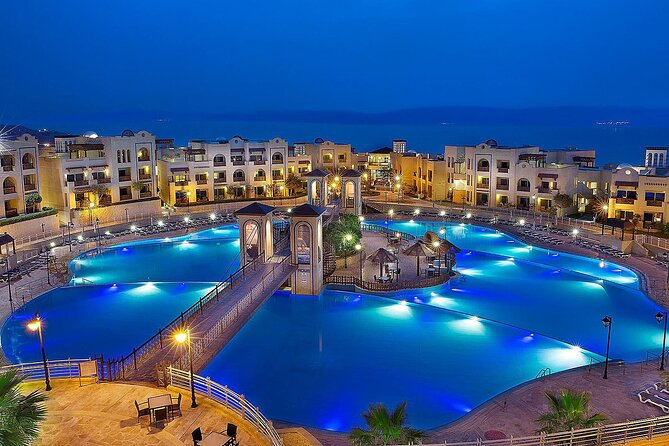
I like the shape of this trip. It begins and ends near Amman, moves north and east before heading south, then returns north toward the Dead Sea. That creates a broad tour of Jordan rather than a single Petra-centered holiday.
You see Roman Jordan at Jerash, early Islamic architecture in the eastern desert, biblical sites around Madaba and Mount Nebo, Nabatean Petra, Bedouin desert scenery in Wadi Rum, and the mineral waters of the Dead Sea. Few short tours offer such a wide range of places.
The private format matters here. Jordan’s sights are spread out, so you spend substantial time in the vehicle. With your own driver, you can ask for a break, adjust the pace, or spend longer at a favorite stop. The tradeoff is that private touring does not automatically mean a guide at every site. The package specifically includes local guides in Petra and Jerash, not throughout the entire journey.
The operator also provides 24-hour support. That is reassuring on a multi-stop trip, particularly when your arrival includes airport paperwork and visa assistance.
A few more Amman days worth comparing
- Amman: Petra, Wadi Rum, and Dead Sea 2-Day Tour
★ 4.9 · 1,173 reviews - 2-Day Tour: Petra, Wadi Rum, and Dead Sea from Amman
★ 5.0 · 1,141 reviews - From Amman: Petra & Wadi Rum Private or group Day Tour
★ 4.9 · 750 reviews
Day 1: A soft landing at Queen Alia Airport
The first service begins before you reach passport control at Queen Alia International Airport. A representative is scheduled to meet you with a name tag, handle the airport paperwork, arrange the visa procedure, and return your passport to you.
After you collect your luggage, look for your driver outside the arrivals area. The driver will also carry a sign with your name and take you to your Amman hotel for the night.
This is a useful arrival service, especially if you are tired or unfamiliar with the airport process. Your booking confirmation is issued at the time of reservation, but it is sensible to keep the operator’s contact details handy in case your flight changes.
There is no sightseeing planned on the first day. That is a good thing if your flight arrives late. You can settle in rather than rushing straight into a major archaeological site.
Day 2: Desert castles east of Amman
Day 2 heads into the desert east and south of Amman to visit Qasr Amra, Qasr Kharana, and the Azraq citadel. These buildings are often called castles because of their size and fortified appearance, but their purposes varied. They served at different times as caravan stations, agricultural centers, commercial points, resting places, and outposts.
Qasr Amra is particularly important for its Islamic art, engravings, and stucco decoration. The sites reflect Persian and Greco-Roman artistic influences and offer a different view of Jordan from the better-known Roman and Nabatean monuments.
I consider this one of the more distinctive parts of the route. Many short Jordan trips rush from Amman to Petra and never show you the eastern desert complexes. Here, you get a look at eighth-century architecture and the role of desert routes in connecting rulers, merchants, and local Bedouin communities.
The catch is that this is a full sightseeing day in a relatively spare setting. You will not find a long list of polished attractions close together. Wear comfortable shoes, protect yourself from the sun, and carry water. The description does not provide the exact timing or lunch arrangement, so confirm both before departure.
Day 3: Ajloun Castle and the Roman streets of Jerash
The route turns north through pine and olive forests to Ajloun Castle. Built in 1184 by one of Saladin’s generals, the castle controlled local iron mines and helped guard routes between Jordan and Syria. Its position also gave defenders oversight of routes leading toward the Jordan Valley.
Ajloun adds medieval military history to a week already filled with ancient sites. You can expect walls, towers, and broad views rather than a fully furnished palace. The setting in the wooded hills also gives this day a different feel from the eastern desert.
From Ajloun, you continue to Jerash, one of Jordan’s major archaeological sites. The city was inhabited for more than 6,500 years and entered Roman control after Pompey’s conquest in 63 BC. It later joined the Decapolis, an alliance of ten important Roman cities.
Jerash is the place where the included local guide can make a real difference. A guide can help you understand the purpose of the colonnaded streets, temples, theaters, and public spaces instead of leaving you to admire a long row of stones without context.
Give your feet some care here. The site is extensive, and the route between its monuments can be tiring. The combination of Ajloun and Jerash makes Day 3 culturally strong, but it is not a lazy day.
A completely different kind of day out:
- From Amman: Petra and Wadi rum Full day Tour
★ 5.0 · 538 reviews - 2-Day Petra, Wadi Rum and Dead Sea Tour from Amman
★ 5.0 · 467 reviews - 3-Day Private Tour from Amman: Petra, Wadi Rum, Dana, Aqaba, and Dead Sea
★ 5.0 · 425 reviews - Petra Full-Day Private Tour from Amman
★ 4.9 · 392 reviews
Day 4: Mount Nebo, Madaba, and the Kings’ Road
Mount Nebo is connected with the biblical account of Moses seeing Canaan. It is also described as a major Christian pilgrimage site in Jordan. The attraction is both religious and scenic, though the exact viewing conditions will depend on weather.
Madaba follows with a different kind of treasure: mosaics. The Greek Orthodox Church of St. George contains the city’s best-known mosaic attraction, making Madaba one of the most memorable stops for anyone interested in religious art and maps.
From there, the route follows the Kings’ Road south. This ancient trade route runs along the Jordanian ridge for roughly 200 miles. The drive is part of the experience, with changing views and the dramatic Wadi al-Mujib canyon along the way.
The day continues toward Kerak. The supplied program indicates a visit in Kerak, but the detailed description is cut short, so ask the operator exactly which site is included and how much time is allotted.
This is a scenic and meaningful day, but it may feel crowded. Mount Nebo, Madaba, the Kings’ Road, Wadi al-Mujib, and Kerak involve several stops and a long southbound transfer. I would not plan an evening event after this day.
Day 5: A full day inside Petra
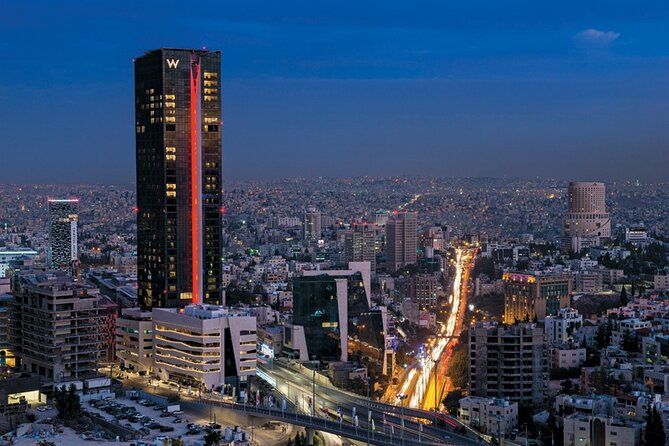
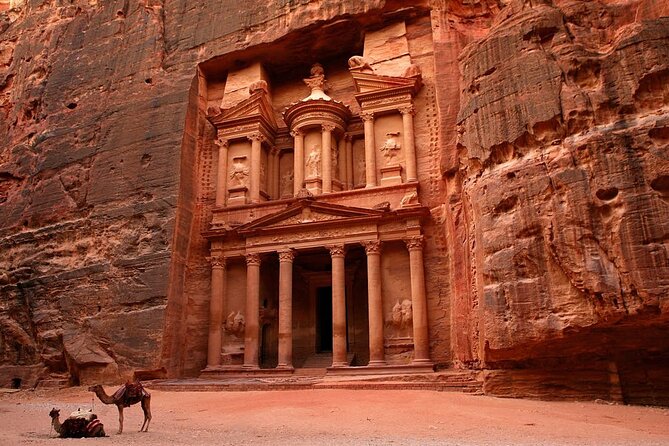
Petra deserves the full day provided here. The visit begins with a walk of about 700 meters toward the entrance of the Siq, the narrow gorge that leads to the Treasury. The first glimpse of Al Khazneh is one of Jordan’s great travel moments because the carved facade appears suddenly between the rock walls.
From the Treasury, the route continues toward the Royal Tombs, the Cardo, temples, churches, museums, and other facades. Depending on your energy and the guide’s plan, you can continue toward the Monastery or the High Place of Sacrifice.
Do not underestimate the physical side of Petra. The approach through the Siq is manageable for many people, but the full site includes uneven ground, walking, steps, and uphill sections. Comfortable footwear is more important than stylish footwear here.
The included local guide is valuable because Petra is not just one monument. It was an ancient Nabatean city with religious, commercial, and residential spaces. A guide can help you read the site as a city rather than treating the Treasury as the whole attraction.
A full day still requires choices. You may not see every corner at a relaxed pace, especially if you attempt the Monastery and High Place of Sacrifice in the same day. Tell the guide what matters most to you.
Day 6: Little Petra and the open spaces of Wadi Rum
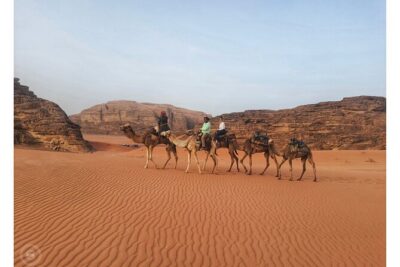
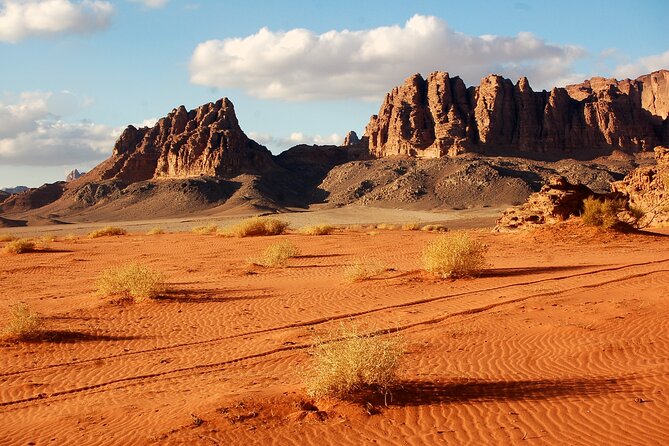
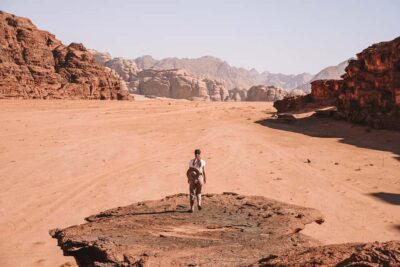
The morning begins at Little Petra, a smaller Nabatean site that prepares you for Petra’s larger scale. The stop is followed by Wadi Rum, known as the Valley of the Moon and described by T. E. Lawrence as vast, echoing, and divine.
Your package includes about two hours in a Jeep. That is enough to experience the major rock formations and the broad desert setting, though it is not a full expedition across Wadi Rum.
The desert is defined by monolithic rock formations rising from open sand and stone. The program also points to canyons, water wells, and rock drawings dating back about 4,000 years. These details give the excursion more depth than a simple scenic drive.
Wadi Rum also connects with the history of Prince Faisal Bin Hussein and T. E. Lawrence. The program references their activities in the area, though the provided description ends before giving the full details.
One Wadi Rum dinner is included, along with the overnight stay. Confirm whether your camp accommodation is included under the same hotel category as the rest of the trip, since the package describes double-room bed-and-breakfast accommodation except for dinner in Wadi Rum.
Bring protection from sun, dust, and temperature changes. The desert can feel very different from Amman or Petra, and the Jeep ride may be bumpy. If you want a longer walk or extra desert activities, those are not specified in the package and should be checked in advance.
Day 7: Floating at the Dead Sea
The final major stop is the Dead Sea, about 400 meters below sea level. The eastern shore is described as quiet and lightly populated, with a setting connected to biblical cities including Sodom, Gomorrah, Admah, Zeboiim, and Zoar.
The tour includes entry to a private beach. You can bathe in the mineral-heavy water, try the famous Dead Sea mud, use freshwater pools, and relax by the shore.
Floating is the key experience. The water’s mineral content makes sinking difficult, but you should avoid getting it in your eyes or swallowing it. Follow the beach’s safety instructions and rinse off after the bath.
This is a welcome change after Petra and Wadi Rum. The schedule allows for rest, sunbathing, swimming, and food, although meals beyond the specified inclusions are your responsibility.
The timing matters. Day 7 functions as both a destination and a recovery day after several active sightseeing days. If you prefer more Amman time, ask if the route can be adjusted, but the supplied program places the Dead Sea here before the airport transfer.
Accommodation, meals, and transport
The package includes overnight stays in double rooms on a bed-and-breakfast basis, with seven breakfasts. It also includes an air-conditioned vehicle, airport transfers, site entrance tickets, visa assistance, and around-the-clock support.
The meal details need careful reading. Lunches and most dinners are not included, and personal drinks are excluded. A dinner is specifically included in Wadi Rum. Since the general inclusion wording is not perfectly clear, ask for a written meal breakdown before booking.
At $1,509.89 per person, the price can offer good value for two people sharing a room and taking a private vehicle. Entrance fees alone can add up across Petra, Jerash, the desert castles, Mount Nebo, Madaba, and other stops. Airport handling and the included Jeep trip also remove several arrangements from your plate.
Still, the price is not all-inclusive. You need to budget for international flights, lunches, most dinners, drinks, health insurance, repatriation cover, and personal spending. The value is strongest if you want a private driver and a fixed route, not if you are trying to build the cheapest possible Jordan trip.
Who will enjoy this tour most
I would recommend this experience to you if you want Jordan’s main sights without joining a large group. It suits first-time visitors who value a driver, airport help, prearranged tickets, and a local guide at Petra and Jerash.
It is also a good fit for couples, families, and small groups who want a little flexibility inside a planned framework. The private vehicle lets your group travel together and request reasonable stops.
You should think twice if you want a slow trip. The route covers a lot of ground, and Days 3, 4, 5, and 6 can be physically demanding. It is less suitable for anyone seeking extensive free time, a fully guided experience at every stop, or a package with all meals included.
The provider’s strongest reported qualities are organization, assistance, driver service, and language support. Assma is praised for making Jordan easier to understand, while drivers including Mimmo and Mohamed are described as professional, kind, and attentive. Some feedback also highlights Italian-language help, but you should confirm the language of your assigned driver and guides.
Cancellation terms are strict near departure: cancellation at least six full days before the start qualifies for a full refund, two to six days allows a 50 percent refund, and cancellation within two days receives no refund. Changes follow the same cutoffs.
Should you book the Jordan Classic?
Book this tour if you want a well-organized private circuit with Petra, Jerash, Wadi Rum, and the Dead Sea all in one week. The included tickets, airport assistance, private transport, and specialist guides give the $1,509.89 price a sensible foundation.
Before booking, confirm the hotel names, the exact Kerak stop, meal coverage, driver language, and how much time you will have at Petra and Wadi Rum. If those details suit you, this is a strong choice for a first Jordan visit that balances ancient sites, religious landmarks, desert scenery, and a little time to float.
FAQ
Where does the tour start?
The tour starts at Queen Alia International Airport in Amman, Jordan.
Where does the tour end?
The experience ends back at the meeting point after transfer to Queen Alia International Airport.
How long does the tour last?
The tour lasts approximately eight days.
Is airport pickup included?
Yes. A representative meets you at Queen Alia International Airport before passport control, assists with the airport paperwork and visa procedure, and then connects you with your driver after baggage collection.
Is this a private tour?
Yes. Only your group participates in the activity.
Are meals included?
Seven breakfasts are included. A dinner is included in Wadi Rum. Lunches, most dinners, drinks with hotel meals, and personal expenses are not included.
Are international flights included?
No. International flights are excluded from the package.
Which sites include a local guide?
A local tour guide is included at Petra and Jerash.
How long is the Wadi Rum Jeep excursion?
The Wadi Rum Jeep excursion lasts approximately two hours.
Just added in Amman
- From Amman :Private full day tour to Jerash ,Ajoune and Um Qais★ 5.0 · 12 reviews
- Queen Alia Airport Transfers From / To Amman, Petra, Dead Sea.★ 5.0 · 3 reviews
- airport pick up & transportations Services★ 5.0 · 15 reviews
- 2-Day Private Tour in Jordan – Deluxe Tent★ 5.0 · 9 reviews
- FROM AMMAN | Petra & Wadi Rum in one day | The Jordanian Mappers★ 5.0 · 12 reviews
- Amman Private City Tour With Local Lunch★ 5.0 · 2 reviews
- From Amman to West ( Madaba, Mt Nebo, baptism site and dead sea)★ 4.0 · 5 reviews
- Wadi Rum Full-Day Private Tour from Amman or Airport★ 5.0 · 2 reviews
Guided, compared.
3-hour Private Guided Tour In Petra with hotel pick up.
Read our review →
Explore 10-Hour Jeep Tour Pass, Guide, Meal & Stay
Read our review →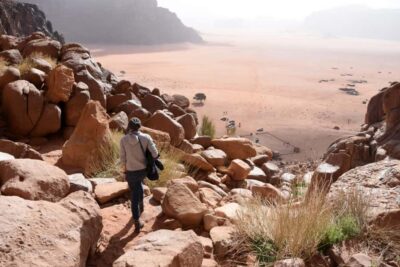
Choose 2 to 9 Hour Jeep Pass, Guide & Meal Options
Read our review →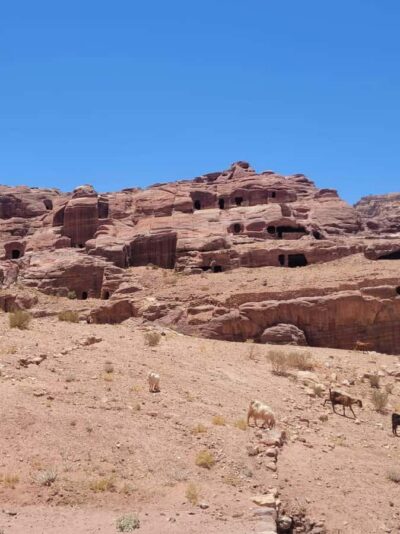
Private 3-Hour Guided Tour of Petra with Hotel Pickup .
Read our review →
Amman Food Tours: 3-Hours Guided Walking Food Tour in Amman
Read our review →